

Business Operation · 2025
In this section24 topics
- Corporate Information4 items
- Dividend Policy2 items
- Major Shareholders3 items
- Business Strategies Overview6 items
- Material Changes & Developments2 items
- Use of Proceeds from Securities Offerings3 items
- Commitments Made in the Registration Statement1 item
- Group Operating-Structure Policy1 item
- Companies Where the Company Holds ≥10%1 item
- Shareholders with Potential Conflict of Interest1 item
- Relationships Among Major Shareholders3 items
- Shareholders' Agreement1 item
- Shareholding Diagram (Group Structure)2 items
- Income Structure4 items
- Product / Service Characteristics3 items
- Research & Development7 items
- Assets Used in the Business6 items
- Marketing Policy & Competition3 items
- Procurement of Products & Services7 items
- Nature of Business — Overview1 item
- Product Information — Overview1 item
- Projects Under Construction1 item
- Debentures & Bills of Exchange2 items
- Convertible Securities1 item
Corporate Information
Company Name
Sri Trang Gloves (Thailand) Public Company Limited
Telephone
+66(0) 2207 4500
Website
www.sritranggloves.com
stgt_ir@sritranggroup.com
Dividend Policy
Dividend Policy
The Company has a dividend policy to pay dividend distributions to shareholders at least 50 percent of its net profit based on the Company’s separate financial statements after deductions of corporate income tax and allocation of all types of reserves in accordance with the Company’s Articles of Association and applicable laws. The dividend distributions to be made shall not exceed the Company’s retained earnings as appeared in the separate financial statements. Dividend payment shall be made by taking into consideration relevant factors such as the Company’s financial position, operating results, cash flow and the ability of the Company’s subsidiaries to make dividend payments including the projected capital requirements for future growth, economic conditions, possible impacts from external factors on the operations of the Company and such other considerations as our Board of Directors may consider appropriate.
After the Board of Directors’ resolution on approval for the annual dividend payment, the Board of Directors shall propose to shareholders’ meeting for its approval on such payment, except for interim dividend payment which the Board of Directors has authority to approve from time to time when deemed that the Company has appropriate profits. The interim dividend payment will then be reported at the next shareholder meeting.
Historical Dividend Payments
| This Year | Last Year | 2 Years Ago | 3 Years Ago | 4 Years Ago | Metric | Description | Remark |
|---|---|---|---|---|---|---|---|
| -0.04 | 0.35 | 0.05 | 0.58 | 8.29 | Net profit per share (Baht : Share) | Net profit per share (baht : share) | Earnings per share is calculated by dividing profit for the year attributable to equity holders of the Company (excluding other comprehensive income) by the weighted average number of ordinary shares. |
| 0.5 | 0.5 | 0.5 | 0.75 | 4.65 | Dividend per share (Baht : Share) | Dividend per share (baht : share) | 1. Dividend per Share : Financial Statements for the Year Ended 31 December 2021
- Interim dividend No.1 = THB 1.50
- Interim dividend No.2 = THB 1.25
- Interim dividend No.3 = THB 1.25
- Final Dividend = THB 0.65
2. Dividend per Share : Financial Statements for the Year Ended 31 December 2022
- Interim dividend No.1 = THB 0.50
- Final Dividend = THB 0.25
3. The Board of Directors’ Meeting No. 2/2026 held on 19 February 2026, resolved to approve the dividend payment for 2025 at the rate of THB 0.50 per share. The right to receive such dividend is uncertain until the 2026 Annual General Meeting of Shareholders has granted an approval for such dividend payment on 9 April 2026. The total dividend payable will depend on the number of registered and issued shares, after deducting all treasury shares, on the XD date. |
| 0 | 0 | 0 | 0 | 0 | Dividend stock ratio (Number of original shares: dividend shares) | Ratio of stock dividend payment (existing share : stock dividend) | |
| 0 | 0 | 0 | 0 | 0 | Dividend share value per share (Baht : Share) | Value of stock dividend per share (baht : share) | The Company did not issue any stock dividends during 2021 - 2025; therefore, both the stock dividend ratio and the stock dividend value per share are presented as zero. |
| 0.5 | 0.5 | 0.5 | 0.75 | 4.65 | Total dividend payment value (Baht : Share) | Total dividend payment (baht : share) | |
| 0 | 239.31 | 0 | 147.2 | 54.8 | Dividend payout ratio to net profit (%) | Dividend payout ratio compared to net profit (%) | 1. Dividend Payout Ratio (%) is calculated from the profit of the Company’s separate financial statements. For the years 2023 and 2025, the ratio is shown as zero because the Company recorded a net loss in those years, making the calculation of the dividend payout ratio not possible. Nevertheless, the Company has sufficient retained earnings and therefore proposes to pay the dividend from retained earnings.
2. Is / is not in accordance with the dividend payment policy (Please specify the reason).
- Year 2021 - 2022 In accordance with the Company's dividend payment policy.
- Year 2023 - 2025 In accordance with the Company's dividend policy, the Company paid the dividend for the performance of the year 2023 - 2025 from unappropriated retained earnings instead of net profit. |
Business Strategies Overview
Introduction
The Board of Directors reviews the vision, mission, strategies, core values and objectives for business operations, including sustainability goals (ESG) which are set annually. Last year, the Board of Directors resolved to revise the Company’s mission and monitor its implementation. This was communicated to the organization’s personnel via email, published in a notebook, and held a Town Hall event to communicate the matter. The Board of Directors has also had relevant departments report their performance results in line with the mission and strategy on an annual basis and assigned sub-committees to monitor continuously, including having the Management team monitor performance in weekly meetings. The Company has established the vision, mission, strategies, core values, and sustainability goals for the year 2026 as follows:
Chairman's Message
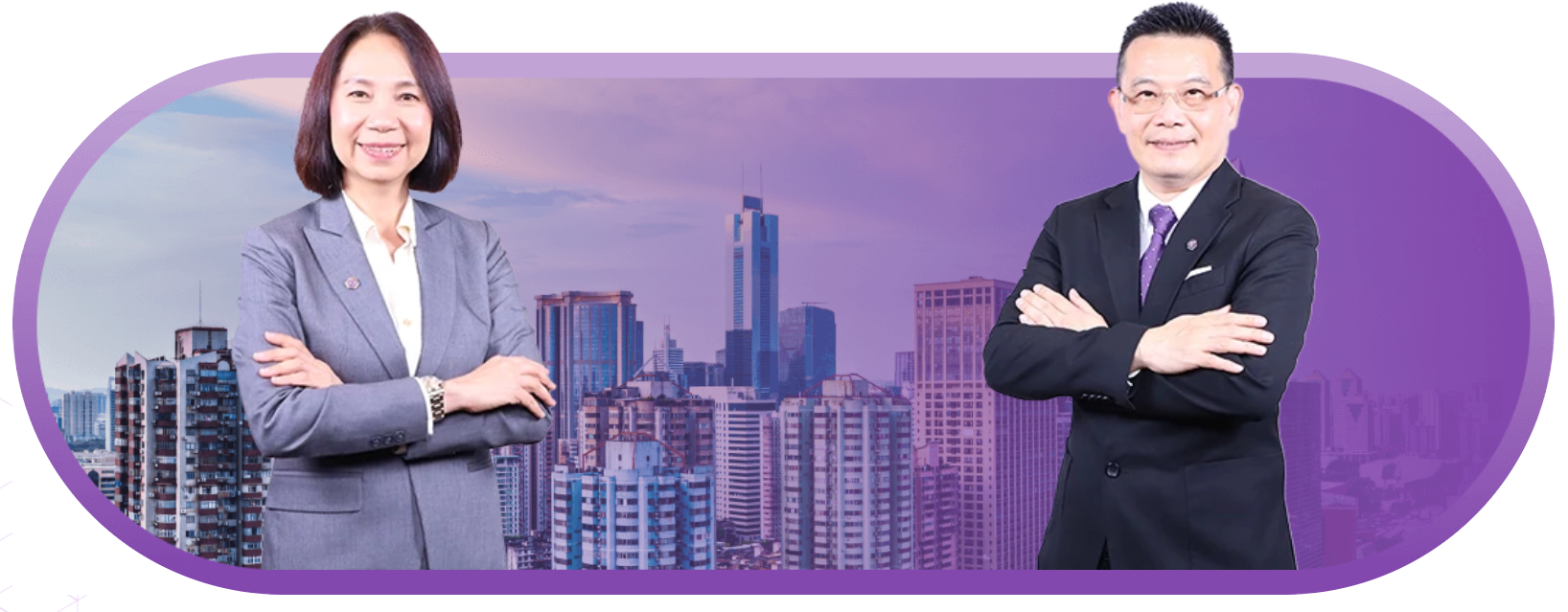
Dear All Stakeholders,
Throughout the year 2025, the Company operated amid challenges from volatility in the rubber glove industry by several external factors. These included the U.S. Reciprocal Tariff measures, the expansion of production capacity by various industry players that continued to intensify price competition, fluctuations in raw material prices, the appreciation of the Thai Baht, and flooding in areas surrounding some of the Company’s manufacturing facilities in Hat Yai District, Songkhla Province. However, the Company maintained its competitiveness effectively through a flexible production structure covering both natural rubber (NR) and nitrile rubber (NBR) gloves, as well as product diversification supported by research and development to meet customer needs. In addition, the Company expanded its market presence across different regions worldwide to achieve strategic balance, reduce the risk of reliance on a single market, and enhance long-term operational stability. In 2025, the Company recorded total revenue of THB 23,890.3 million, sales volume of 37,102 million pieces, and EBITDA (excluding special items) of THB 3,426.5 million.
Although the flooding in the southern region toward the end of the year was another significant event that affected the community, employees, and the Company’s operations, resulting in temporary shutdowns and damage at some of the Company’s manufacturing facilities, the Company promptly carried out systematic recovery efforts. These included repairing machinery, restoring operational areas, managing business continuity, ensuring employee welfare, and providing appropriate assistance to surrounding communities. Most facilities were able to resume operations within a short period of time. With the dedication and capabilities of our personnel, together with the Company’s operational strategies and the confidence and support from all stakeholders, the Company was able to recover from this incident in a stable manner and continue moving forward to drive strong and sustainable long-term growth. Most facilities were able to resume operations within a short period of time. With the dedication and capabilities of our personnel, together with the Company’s operational strategies and the confidence and support from all stakeholders, the Company was able to recover from this incident in a stable manner and continue moving forward to drive strong and sustainable long-term growth.
Advancing Toward a Sustainable Supply Chain Leader Through the “TRACEABILITY” Mission
The Company strengthened its sustainability efforts through the “TRACEABILITY” mission in 2025, aiming to enhance a transparent and verifiable supply chain. This is achieved through the use of natural rubber raw materials that can be fully traced back to their origins and assessed under the EU Deforestation Regulation (EUDR) risk-evaluation framework at the plantation level, ensuring that the Company’s products use raw materials free from deforestation and comply with EUDR requirements, as well as any additional regulations that may arise in the future. The Company also promotes and supports collaboration with supply chain stakeholders to jointly enhance sustainability standards and meet global market needs. The Company has supplied EUDR-compliant gloves to more than 19 countries, with demand continuing to rise in the European market. In addition, the Sri Trang Group has elevated its FSCTM standards by integrating the EUDR requirements, enabling FSCTM certification under the FSC-STD-01-004 FSC Regulatory Module (FSC100%/Reg) since August 2025. This strengthens product credibility, enhances differentiation, and responds to increasing expectations from customers and consumers worldwide who place greater importance on sustainability. Moreover, the expertise gained in supply chain traceability enables the Company to effectively adapt to additional standards and regulatory requirements that may emerge in the future.
Integrating Sustainable Business Strategies Under the “Clean World Clean Gloves” Concept
In addition, as the Company has set a Net Zero target by 2050 to reduce greenhouse gas emissions in line with the Science Based Targets initiative (SBTi), the Company has implemented clear strategies and action plans, including energy-efficiency improvements, the transition to low-carbon technologies, and greenhouse gas sequestration through various activities. In 2025, the Company reduced greenhouse gas emissions per unit of product (Scope 1 and 2) by 12.72%, compared with the 2024 base year, and reduced organizational greenhouse gas emissions (Scope 1 and 2) by 17.24%, compared with the 2024 base year, achieving the planned targets. Furthermore, all of the Company’s manufacturing facilities completed greenhouse gas emissions verification in accordance with the requirements for carbon footprint calculation and reporting under the GHG Protocol. The Company also registered 24 product groups under the Carbon Footprint of Product (CFP) program with the Thailand Greenhouse Gas Management Organization (Public Organization).
The Company continued to promote the use of solar energy through the installation of Solar Rooftop and Floating Solar systems across all six manufacturing facilities, with a total installed capacity of 14.72 megawatts, increasing from 2.97 megawatts in 2024. The systems generate an average of 20,632 megawatt-hours per year, which is used in the production processes and office operations. This resulted in a reduction of 9,800 tCO2e per year in Scope 2 emissions from purchased electricity and generated electricity cost savings of approximately THB 81 million. Regarding key performance results under the Company’s energy management targets in 2025, the Company reduced electricity consumption per unit of product by 18.50%, compared with the 2019 base year, which is an improvement of 4.06% compared with 2024. For waste management, initiatives under various projects enabled the Company to reduce non-hazardous production waste disposed of via landfill per unit of product by 6.05%, compared with the 2024 base year. As a result of its environmental management performance, the Sadao P.S. facility received the Green Industry Level 4 (Green Culture) Award for 2025 from the Ministry of Industry. In addition, all of the Company’s manufacturing facilities continued to maintain ISO 14001 environmental management system certification, achieving 100% coverage in line with the Company’s sustainability targets.
In terms of sustainability-related investments, as of 31 December 2025, the Company had fully utilized the proceeds from the issuance and offering of its Green Bond, with a total amount of THB 1,500 million, enabling the Company to drive its operations in line with the established objectives and strategies. In addition, in 2025, the Company obtained a Sustainability-Linked Loan (SLL) in a total amount of THB 2,000 million, under which the loan interest rate is adjusted upward or downward each year based on performance against sustainability targets. These targets are linked to key sustainability indicators, including reducing greenhouse gas emissions (Scope 1 and 2) per unit of product by 20% by 2030 compared with the 2024 base year, and reducing non-hazardous production waste sent to landfill per unit of product by 50% by 2030 compared with the 2024 base year. The Sustainability-Linked Loan represents an important milestone that reflects the Company’s capability to drive business objectives through sustainability strategies integrated with financial strategies, while elevating corporate standards to an international level and maintaining the Company’s leadership in the global rubber glove industry in line with the “Clean World Clean Gloves” concept, reinforcing sustainable growth alongside environmental responsibility.
Building a Sustainable Value Chain with Responsibility from Upstream to Downstream
The Company is committed to social responsibility throughout its business value chain by safeguarding labor rights, prohibiting child labor and forced labor, respecting human rights, and implementing other relevant practices. As a result, all of the Company’s manufacturing facilities have obtained key international certifications. The Company’s operations were also assessed for human rights risks and impacts at 100% coverage, in accordance with the Company’s sustainability targets. In addition, the Company places strong emphasis on occupational health and safety, operating in accordance with the ISO 45001:2018 standard. The Company achieved zero work-related fatalities and zero occupational illnesses, meeting its established targets. The Company also supports the enhancement of employee skills and capabilities to ensure alignment with its mission and development strategies, particularly in the areas of artificial intelligence (AI) and digital tools. The Company is promoting AI adoption across its operations and strengthening workforce readiness through initiatives such as the launch of the “AI Clinic,” which provides employees with a platform to present AI-related ideas and receive guidance from AI specialists for practical application. In 2025, the Company supported and organized 2,292 training courses, with a total expenditure of THB 9.22 million.
The Company also implements CSR policies and activities that promote sustainable coexistence with local communities by building knowledge, creating jobs, and distributing income to the community in response to stakeholder expectations. Examples include the project developed from the stingless bee farming initiative, which expanded into the production of stingless bee honey under the brand “1,000 Kesorn.” The Company supported the project by providing product branding design and sharing knowledge on online sales channels to enhance market opportunities and strengthen community sustainability. In 2025, the project helped reduce costs and generate a total income of THB 96,480 for community members, with a Social Return on Investment (SROI) of 4.60 times. Following the flooding in the southern region in November 2025, the Company carried out relief operations to support affected communities. Assistance included the distribution of drinking water and more than 1,300 relief packages, as well as the deployment of employee volunteers and fire trucks to clean communities, schools, and hospitals in more than 25 locations. The Company also donated funds to public health agencies and provided over 900,000 pieces of medical and general-purpose rubber gloves to government agencies, field hospitals, and evacuation centers across Songkhla, Yala, Pattani, and Narathiwat. The Company also prioritized the welfare and safety of both permanent and daily employees. Relief measures included the distribution of food and essential supplies, financial assistance, and employee home cleaning support. In addition, the Company established the Sri Trang Community Kitchen and temporary shelters to support employees affected by the flooding, providing food, clean and safe accommodation, and 24-hour nursing care.
The Company places importance on its business partners in both commercial and corporate governance aspects. The Company expanded its transparent business network to suppliers under the CAC Change Agent project, with more than 10 suppliers joining in the first year to declare their commitment to anti corruption. As a result, the Company was certified as a CAC Change Agent member and received the CAC Change Agent Award 2025. The Company also communicated its Code of Conduct to all business partners, all of whom, representing 100 percent, acknowledged and signed the Code of Conduct. In addition, the Company conducted business ethics and labor standards audits in accordance with the SMETA Sedex Members Ethical Trade Audit standard and completed 100 percent ESG risk assessments covering environmental, social, and governance issues across supplier operational sites, in line with its sustainability targets. Moreover, the Company conducts business ethically and maintains strong collaboration with its partners, resulting in the Company receiving the SX TSCN Sustainability Award 2025 for the second consecutive year from the Thailand Supply Chain Network TSCN, as well as the Platinum Business Partners Award for the second consecutive year and the Business Partner of the Year 2025 Award from Thai Beverage Public Company Limited. These recognitions reflect the trust and confidence of business partners in fostering collaboration to deliver value to consumers and to advance the industry toward sustainable development.
In terms of customer relations, the customer satisfaction survey result was 85.69 percent, which exceeded the target of 80.0 percent. The Company has made its best efforts to ensure that customers receive prompt responses and has analyzed customer feedback to identify root causes for improvement and prevention. The Company also places great importance on safeguarding customer confidentiality and does not use customer information for its own benefit or for the improper benefit of any related parties. Throughout the reporting period, there were no complaints related to customer personal data, and the Company successfully maintained the security of personal data with zero data breach incidents. The Company also complied 100 percent with the requirements of the Personal Data Protection Act B.E. 2562 (PDPA), in line with its sustainability targets.
Strengthening Corporate Governance through Technology and International Standards
The Company assessed its internal control system with reference to the international standards of the Committee of Sponsoring Organization of the Treadway Commission COSO 2013. The Company also assessed the quality of its internal audit function in accordance with the Quality Assurance and Improvement Program QAIP. The Audit Committee concluded that the Internal Audit Department operates in alignment with international internal auditing standards. In addition, the Company adopted Power BI as a data analytics tool to analyze user access rights in the SAP system, helping enhance the quality and efficiency of internal audit activities in accordance with international internal auditing standards. For risk management, the Company achieved certification under the business continuity management standard ISO 22301 2019, demonstrating effective performance in this area. In 2025, the Company reviewed and assessed Enterprise Risk Management ERM and updated the risk ranking to align with the Company’s business conditions and environmental factors during the year. The Company identified risk factors that include emerging risks and environmental, social, and governance ESG risks, and also analyzed and assessed risks, opportunities, business impacts, and financial impacts related to climate change.
For technology and artificial intelligence AI development, the Company has adopted AI and Internet of Things IoT technologies to analyze and improve production processes, and has placed importance on the use of AI Agents, particularly in office operations. In addition, in 2025, the Sri Trang Group established a data governance policy and operating procedures, which represent an important part of preparing the corporate data infrastructure to ensure effective management of data as a key organizational asset. This not only supports faster and more accurate decision making, but also enhances business credibility and strengthens the Company’s long term competitiveness, moving toward becoming a data driven organization. The Group Company’s AI development has progressed as planned, with preparations in place for data, infrastructure, and processes to support the expansion of AI adoption in the future. This aligns with the development direction for 2026, in which the Company is committed to the mission “Empowering AI: The Power of Artificial Intelligence” to promote the application of AI across all areas of the organization. The Company also places emphasis on developing manufacturing AI technologies to enhance efficiency, accuracy, and innovation in production processes, with the goal of expanding these capabilities across all operational dimensions in the future.
From the Company’s effective performance in corporate governance and sustainability, the Company received several awards and rankings at both national and international levels. These include the Best Sustainability Awards in the Consumer Products category from the Stock Exchange of Thailand at the SET Awards 2025, and the ranking as a Sustainability Yearbook Member in the Healthcare Equipment and Supplies sector in the S and P Global Sustainability Yearbook 2026. The Company also received an ESG Risk Rating assessment from Morningstar Sustainalytics, which rated the Company’s ESG risk level as low.
On behalf of the Board of Directors, I would like to express our appreciation to all shareholders, customers, business partners, and stakeholders for your continued confidence in and support for the Company. I would also like to thank all employees for their dedication and collective effort in fulfilling the Company’s mission and objectives, which drive the organization toward industry leadership. The Company remains committed to creating both value and worth through continuous capability enhancement and development. We will continue to bring opportunities and strong performance to the organization, stakeholders, and society, ensuring that we grow sustainably together.
Vision

The Company is committed to be the world leader in rubber gloves business and operate the business with social and environmental responsibilities throughout value chain with an excellency and transparency performance and emphasizing participation and infinite business development in order for delivery the products and services with the highest standard of the Company as well as creating a balance between the business value and shared value for all stakeholders.
Objectives
Business Objectives
Sri Trang Gloves (Thailand) Public Company Limited (“STGT” or “Sri Trang Gloves”) is a manufacturer of examination and industrial gloves. As of 31 December 2025, STGT has a total installed production capacity of approximately 48,320 million pieces per year, with all production facilities located in Thailand, which is the world’s strategic location for concentrated latex production, in terms of both quantity and quality. STGT manufactures and distributes high-quality rubber gloves for medical and non-medical uses in other industries. The main products are Natural Rubber Powdered (NRPD), Natural Rubber Powdered-Free (NRPF), and Nitrile Butadiene Rubber (NBR) gloves, which are distributed in more than 175 countries worldwide.
Core Values

In order to “To Delivery Touch Of Life On a Global Scale”, the Company cultivates an organizational culture that encourages employees at all levels to continuously develop themselves and drive the Company toward leadership in the glove manufacturing industry. The Company supports employees in all aspects of their capability development, enabling them to become Specialists in their respective responsibilities while fostering Teamwork to achieving the Company’s goals. Employees are encouraged to persevere through challenges in all circumstances with integrity, Accountability, and strong corporate governance.
Goals
Performance on Mission and Business Objectives for the year 2025

Context and Risk Management - In 2025, the Company operated its business amid a challenging environment by several external factors, including global economic conditions, tax and trade measures, intense price competition, fluctuations in production costs and the Thai Baht, as well as severe flooding in Songkhla Province, where some of the Company’s factories are located. Despite multiple pressures, the Company maintained business continuity and managed risks prudently through a flexible production structure that covers both natural rubber (NR) and nitrile rubber (NBR) gloves, diversified market coverage across regions, continuous product development through research, and the advancement of technology and artificial intelligence (AI). Towards the end of the year, the flooding in the southern region caused certain factories to temporarily suspend operations. The Company promptly and systematically executed recovery plans, including machinery maintenance, restoration of operational areas, implementation of Business Continuity Management (BCM), and support for employee welfare alongside community assistance. As a result, most factories were able to resume operations quickly.
Driven by a Transparent Supply Chain and International Standards - Throughout the year, the Company enhanced the transparency and full traceability of its supply chain by sourcing natural rubber latex with verified origins and conducting risk assessments in accordance with the EU Deforestation Regulation (EUDR) to ensure that its operations are not linked to deforestation. In 2025, the Company supplied products compliant with EUDR requirements to more than 19 countries. In addition, the Sri Trang Group integrated EUDR requirements into its certification process under FSC-STD-01-004 FSC Regulatory Module (FSC100%/Reg) starting in August 2025, strengthening international credibility and reinforcing the Group Company’s leadership in sustainability within the industry. The knowledge and expertise gained in supply chain traceability also enable the Company to adapt swiftly to new or emerging regulatory requirements in the future, while supporting long-term organizational resilience.
Integrating Financial Strategy with Sustainability for Tangible Outcomes - In addition, the Company leveraged its strengths in sustainability development by integrating sustainability strategies into its financial strategy. The Company obtained a Sustainability-Linked Loan (SLL) of THB 2,000 million to support business operations and various investments, including research and development, technology enhancement, personnel capability building, and other initiatives that strengthen the business while maintaining its leadership in the global rubber glove industry alongside environmental responsibility. The loan carries a five-year tenor, and its interest rate is subject to upward or downward adjustment based on the Company’s annual performance against its sustainability targets. These targets are linked to key sustainability indicators, including reducing greenhouse gas emissions (Scope 1 and Scope 2) per unit of production by 20% by 2030 compared to the 2024 baseline, and reducing non-hazardous waste from production processes disposed of by landfill per unit of production by 50% by 2030 compared to the 2024 baseline.
In this regard, the performance against the sustainability indicators and targets linked to the SLL in 2025 showed that the Company was able to reduce greenhouse gas emissions per unit of production (Scope 1 and Scope 2) by 12.72% compared with the 2024 baseline, and reduce organizational greenhouse gas emissions (Scope 1 and Scope 2) by 17.24% compared with the 2024 baseline, achieving the planned targets. In addition, waste management efforts through various project activities enabled the Company to reduce non-hazardous waste from production processes disposed of by landfill per unit of production by 6.05% compared with the 2024 baseline. Furthermore, the Company utilized solar energy through the installation of Solar Rooftop and Floating Solar systems across all six factories, totaling an installed capacity of 14.72 megawatts, up from 2.97 megawatts in 2024. The systems generated an average of 20,632 megawatt hours of electricity per year, which was used in production processes and office operations, resulting in a reduction of Scope 2 greenhouse gas emissions from purchased electricity by 9,800 tonnes of carbon dioxide equivalent per year, along with approximately THB 81 million in electricity cost savings. Under the Company’s energy management targets, electricity consumption per unit of production decreased by 18.50% compared with the 2019 baseline, outperforming the 2024 level by 4.06%.
Innovation, Productivity, and Digital Transformation - In 2025, the Group Company implemented 51 research and innovation projects, with a total budget of THB 67 million. These projects covered product research and development, natural rubber latex and nitrile latex, glove formers, and improvements to various production processes to enhance production efficiency and reduce costs, create business opportunities, support new business initiatives, and strengthen long-term competitiveness. These efforts also promoted sustainable business operations and environmental responsibility. Examples of such projects are as follows:
Projects to develop and enhance existing products to better meet user needs, such as improving surgical gloves to enable medical personnel to more easily wear double gloves, and producing long-cuff latex powder-free gloves to enhance safety in use.
Projects that support both the business and the environment, such as reducing the use of chlorine in the production process of nitrile gloves, which helps lessen impacts on the ecosystem and promotes environmentally friendly production processes. Another example is the “QC Digitization Transformation” project, which transformed the QC process from a paper-based system to a mobile and digital system that connects data through QR codes and the SAP system. This enables real-time status tracking and reporting, resulting in an increase in productivity and achieving zero paper usage, which in turn reduced costs by 45%. The project has now been implemented across all factories.
Technology development projects include the Glove Defect Detection project, which uses Vision Cameras together with AI Vision Deep Learning to detect and sort gloves that do not meet quality standards (Defects). This helps reduce QC in-process defects, along with providing real-time reporting for timely and accurate decision-making. Another example is the Smart Energy System project, which developed a Dashboard Monitoring System integrated with sensors to collect data and monitor energy consumption in real time at 100%. In addition to enabling rapid decision-making through accessible data, the system helps save approximately THB 600,000 in electricity costs per year. All data have been stored digitally in the Data Center and are ready to support future AI applications. Overall, the Company’s Automation, Digital Transformation, and Artificial Intelligence (AI) projects have enhanced productivity, reduced costs, lowered energy consumption, minimized human error, and improved management through real-time data, with all data now forming the foundation to support the development of AI and the Factory of the Future in the next phase.
Although in 2025 the Company faced challenges from various factors including economic and trade conditions as well as a major flooding event, the Company was still able to manage its operations and recover quickly by carrying out its missions and achieving the established targets. This was achieved through the balanced and effective utilization of the Company’s resources including Natural Capital which is managed in parallel with environmental stewardship, Manufactured Capital through the development of Automation, Digital Transformation and AI technologies to enhance efficiency, Human Capital which is continuously developed through skills and knowledge enhancement, Social Capital which focuses on strengthening relationships and improving the well-being of communities and business partners, Intellectual Capital derived from the capability to innovate, research and develop, and Financial Capital which is strategically managed by integrating finance with sustainability approaches to support long-term business growth. Strengthening capabilities across all these areas has enabled the Company to continue driving its business objectives with confidence and establish a strong foundation for stable and sustainable future growth.
Mission and Business Objectives for the year 2026
In 2026, the Company is committed to operating in line with the mission “Empowering AI” to transform AI from concept into tangible impact. We are committed to making AI accessible, understandable, and widely adopted across industries and communities. Having invested steadily over the years, we now leverage the full power of our data resources - integrating AI with robust data management to deliver solutions that matter. We are dedicated to applying AI across all functions of our organization. With a strong focus on Manufacturing AI systems (Sri Trang AI Machine or “SAM”), we strive to unlock greater efficiency, enhance our operations in production and beyond. From basic applications to advanced enterprise use.
Our journey of the Sri Trang Group is to push boundaries and ensure AI becomes a trusted partner in everyday life and business. By combining technology, knowledge, and vision, we aim to empower people with AI that is practical, impactful, and transformative – shaping a smarter, more connected, and more sustainable future for all.
Business Strategies
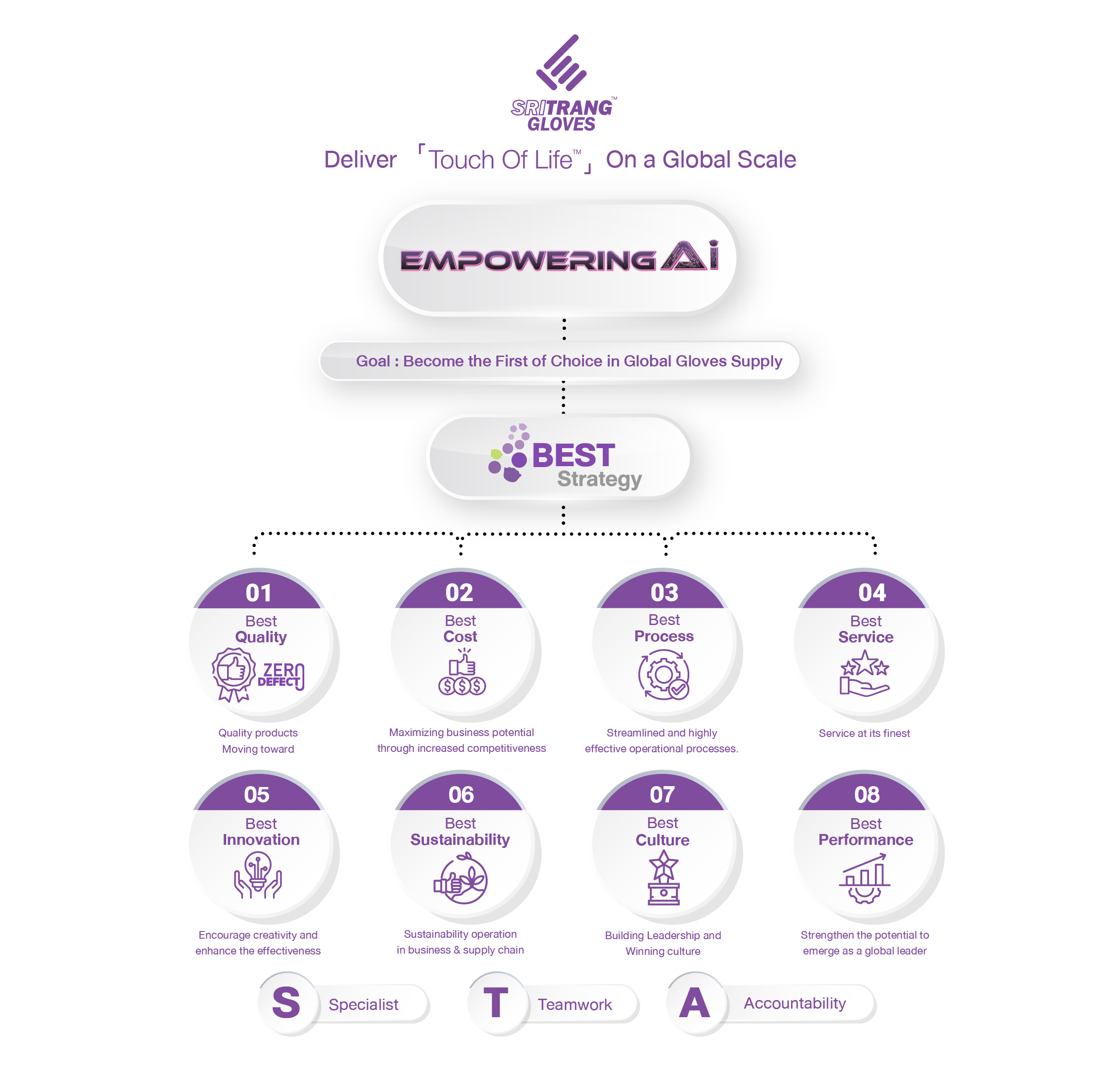
The Board of Directors reviewed and established the “8 BEST Strategies” to drive the Company toward its business objective of becoming a “global manufacturer and distributor of rubber gloves recognized that is recognized and considered the first choice.” The Company continues to develop and maintain the flexibility needed to adapt proactively, strengthen competitiveness and sustain its leadership in the industry. The Board of Directors also formulated the strategies with consideration for sustainable business practices across the supply chain and the implications of climate change. Furthermore, the Board of Directors oversees the implementation of these strategies and assigns the relevant sub-committees to continually monitor progress. For example, under the Best Sustainability strategy, the Company aims to operate sustainably across the supply chain. The Corporate Governance and Sustainable Development Committee is responsible for developing and supervising sustainability practices that take environmental, social and governance dimensions into account throughout the supply chain, as well as overseeing the Company’s efforts to achieve sustainability targets, energy reduction goals and greenhouse gas reduction goals. Under the Best Innovation strategy, the Company promotes the development of knowledge in artificial intelligence (AI) and prioritizes the use of AI Agents, particularly in office operations. The Company also advances the AI Clinic project, which provides a platform for employees to present AI ideas with support from AI experts to help bring those ideas into practice. Examples include process improvements through Automation, reducing errors through Decision Support systems and shortening work processes while enhancing productivity using AI and Digital Tools. These efforts offer opportunities for all departments to participate in improving workflows while strengthening the innovation culture within the organization, forming a solid foundation for developing innovations that support long-term sustainable business operations.
Moreover, the Risk Management Committee has considered sustainability risk factors and overseen the assessment of risks and opportunities associated with climate change as well as the risks linked to the adoption of Sustainable Artificial Intelligence within the Company. Relevant matters were reported to and approved by the Board of Directors and incorporated into the formulation of the Company’s strategies. In line with the AI-driven strategy, the Board of Director further approved the establishment of the AI mission and objectives for the year 2026 to ensure continued development and expansion. The Management monitors progress on strategy implementation through weekly meetings. More information on material sustainability topics and performance, including greenhouse gas reduction,
energy management and artificial intelligence, is available in the Sustainability Report at https://www.sritranggloves.com/en/downloads/sd-report
The Company has set strategies for excellence in the following 8 areas:
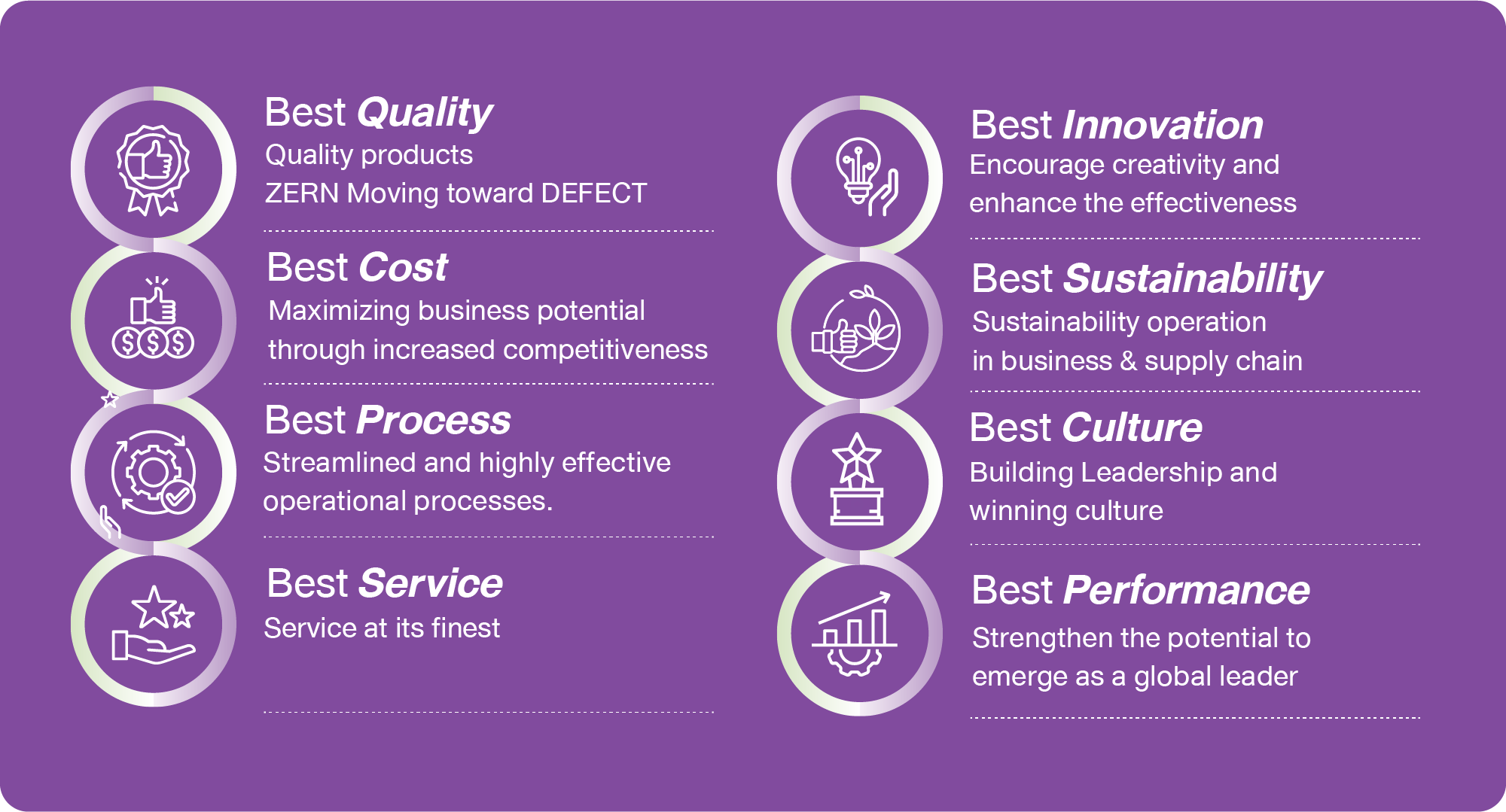
The details of operating according to business strategies and goals are as follows.
Short-to Medium-Term Plan
(a) Focus on enhancing production efficiency and maximizing resource utilization to improve product quality, increase yield and continuously reduce costs. The Company aims to strengthen operational performance across all functions to maintain competitiveness, respond to market demand and create long-term value for stakeholders.
(Best Quality, Best Cost, Best Process, Best Innovation, Best Sustainability, Best Performance)
Although global demand for rubber gloves has begun to recover and return to a more balanced level compared with the past two to three years, the industry continues to face intense competition following the post COVID-19 adjustment period. In this context, systematic efficiency improvements and cost management remain critical factors in sustaining competitiveness for manufacturers in the industry.
The Company will focus on enhancing both production efficiency and resource utilization to improve product quality, increase yield and systematically reduce costs. This includes driving efficiency across all functions throughout the value chain, particularly in cost management, energy efficiency, workforce management and machine performance, which are key cost components in the rubber glove industry. The Company continues to implement production process improvement projects by applying automation and digital technologies, as well as researching, developing and adopting artificial intelligence to increase production accuracy, reduce process losses, improve output per production unit and elevate product quality standards. These efforts also enhance customer satisfaction and reinforce the Company’s long standing reputation for internationally accepted quality in markets around the world.
In 2025, the Company expanded the Glove Defect Detection project, which uses Vision Cameras combined with AI Vision Deep Learning to detect and sort gloves that do not meet quality standards. This system helped reduce in-process QC defects, while providing real-time reporting to support timely and accurate decision making. All data are stored digitally in the Data Center and are ready to support future AI applications. Overall, the Company’s Automation, Digital Transformation and AI projects have enhanced productivity, reduced costs and energy consumption, minimized human error and strengthened real-time data-driven management. The data foundation established through these projects supports the future development of AI and the advancement toward a Factory of the Future.
The strategy also supports the Company’s sustainability goals, including resource efficiency improvements, greenhouse gas reduction and operational cost optimization. These efforts enable the Company to maintain competitiveness in terms of quality and cost amid increasingly intense global market competition, meet the needs of customers in various countries and create long-term value for stakeholders.
Short-to Long-Term Plan
(b) Focus on producing and distributing natural rubber gloves as the core product while maintaining the production capacity of nitrile gloves.
(Best Quality, Best Cost, Best Process, Best Service, Best Innovation, Best Sustainability, Best Performance)
The Company operates flexible production lines that can switch between natural rubber powder-free gloves and nitrile gloves to meet diverse global customer demands. The Company also benefits from a competitive cost structure due to its strategic location in one of Thailand’s major rubber growing regions, resulting in lower raw material, storage and logistics costs compared with competitors, while also reducing greenhouse gas emissions from raw material transportation. During the industry wide expansion of production capacity in the COVID-19 period, most major global glove producers focused primarily on nitrile glove manufacturing. This has further strengthened the Company’s competitive advantage in natural rubber gloves, where its leadership position has become increasingly evident.
The Company continues to focus on producing and developing natural rubber gloves while maintaining the production capacity of nitrile gloves to meet customer needs and preserve its customer base in regions where nitrile gloves are preferred. Maintaining this production balance also positions the Company to capture business opportunities related to U.S. tariff measures, which provide a competitive advantage when exporting to the U.S. market. The Company remains a leading producer of natural rubber gloves, which are widely accepted in many countries, particularly in developing markets with strong demand growth. In addition, having a major shareholder with upstream and midstream expertise in the natural rubber industry enables the Company to collaborate on developing concentrated latex formulas, resulting in diverse, high quality latex suited for new product development. This partnership also provides insights into market conditions and latex price trends, supporting effective risk and opportunity management. Focusing on natural rubber glove production also helps reduce greenhouse gas emissions compared with nitrile gloves, as natural rubber products have a lower carbon footprint than synthetic rubber.
In 2025, the Company offered more than 88 product types, meeting diverse consumer needs with products that are clean, safe, high quality and compliant with international standards, while also being environmentally friendly. The Company conducted research and development across product innovation, natural rubber latex, nitrile latex and production process improvement. Examples include projects to enhance existing products to better meet user needs, such as improving surgical gloves to allow medical personnel to wear double gloves more comfortably and developing long-cuff latex powder-free gloves to enhance safety. Other projects focused on both business and environmental benefits, such as reducing chlorine use in the nitrile glove production process to minimize ecological impact and support more sustainable manufacturing practices.
(c) Enhance production efficiency and strengthen cost competitiveness
(Best Cost, Best Process, Best Sustainability, Best Performance)
The Company has a competitive advantage in energy costs, one of the key cost components in glove manufacturing. The Company uses 100% biomass fuel sourced from rubberwood residues and other wood waste as its primary thermal energy source, unlike competitors that rely on fossil fuels such as oil, gas or coal, which are more expensive and have significantly higher greenhouse gas emissions. This enables the Company to manage production costs more efficiently. Emissions from LPG and coal are 3.1134 and 3.1000 kgCO2eq per kilogram respectively, while biomass produces only 0.0201 kgCO2eq per kilogram. The Company has also optimized its electricity cost structure by installing solar power systems, including Solar Rooftop and Floating Solar, across all six factories to reduce costs and lower emissions from electricity consumption, further strengthening long-term cost competitiveness. In 2025, the Company’s solar power installations reached a total capacity of 14.72 megawatts, up from 2.97 megawatts in 2024, generating an average of 20,632 megawatt hours of electricity per year. This resulted in a Scope 2 greenhouse gas reduction of 9,800 tonnes of carbon dioxide equivalent per year and electricity cost savings of approximately THB 81 million.
The Company continues to apply digital technologies, automation and artificial intelligence to enhance process control, minimize losses, increase production yield, improve energy efficiency and reduce unit costs. These technologies also improve product consistency and process stability, which are critical to strengthening the Company’s competitiveness in a market that remains highly price-competitive. The Company also benefits from a structural advantage in sourcing natural rubber latex due to its position within an integrated natural rubber supply chain. This allows access to raw materials within the production region, reducing procurement and transportation costs. Such advantages enable the Company to maintain a balance between cost, quality and sustainability amid intensifying price competition, while effectively meeting customer needs across diverse markets and creating long-term value for stakeholders.
Notes
*1) According to the Thailand Greenhouse Gas Management Organization (Public Organization).
*2) According to the IPCC Guidelines for National Greenhouse Gas Inventories (2006), considering only CH4 and N2O and excluding biogenic CO2.
(d) Expand distribution channels into new high growth markets
(Best Performance, Best Quality, Best Cost, Best Service, Best Culture, Best Sustainability)
The Company continues to expand its distribution channels into new markets worldwide while maintaining a strong customer base in countries with high glove consumption such as the United States, European markets and Japan. The Company aims to grow its global footprint to more than 190 countries, up from approximately 175 countries at present, with a focus on high growth regions such as Africa, South America, East Asia and South Asia. These regions present significant opportunities due to: (1) Low glove consumption per capita, which remains far below developed markets. For example, glove consumption in many Asian countries is estimated at 5–10 pieces per person per year in 2025, compared with approximately 250 pieces in the United States and 150 pieces in Europe. (2) Increasing focus on public health and hygiene systems. (3) Rising purchasing power, reflected in higher GDP per capita growth compared with developed countries, driving long-term demand for hygiene products including rubber gloves. (4) A strong preference for natural rubber gloves, which offer suitable performance for intended use and remain cost-effective, in line with the Company’s strategy to prioritize natural rubber gloves while maintaining a balanced proportion of nitrile glove production.
The Company has also expanded its retail glove distribution channels across various countries to increase the proportion of sales under the Company’s own brands. In addition, the Company continues to participate in bidding processes across sectors with high glove consumption, particularly public hospitals in many countries. Sales contributions from the Company’s subsidiaries in Indonesia or PT Sri Trang Gloves Indo and the Philippines or Sri Trang Gloves Philippines Inc. have continued to grow, helping meet domestic demand in these densely populated markets with strong and rising glove consumption.
(e) Increase the proportion of sales under the Company’s own brands while expanding the customer base into new markets
(Best Performance, Best Quality, Best Cost, Best Process, Best Service, Best Culture, Best Innovation, Best Sustainability)
The Company manufactures high-quality products for both Original Equipment Manufacturing (OEM) and under the own and subsidiaries’ brands (Original Brand Manufacturing: OBM), distributing through a range of channels suited to each market. These include distribution through subsidiaries, intermediaries, agents and direct sales to large end-users such as private hospitals and public hospital networks in various countries. The Company has set a medium-to long-term target to increase the proportion of OBM sales to 50%, compared with 17.7% in 2025. Achieving this target will depend on the Company’s marketing strategies in each country, the introduction of new products and trademark registrations in relevant markets. Expanding OBM not only strengthens brand presence but also helps reduce overall production costs.
In addition, the rising demand for rubber gloves extends beyond medical use to a wide range of industries and everyday applications. The Company expects the share of natural rubber glove demand from non-medical sectors to continue increasing. The Company therefore aims to expand its customer base and product offerings to industrial users in various sectors worldwide, supporting diverse glove usage needs across all industries and regions.
Furthermore, customers are placing increasing importance on sustainability, reflected through supplier sustainability assessments required prior to business engagement. The Company is able to provide complete and accurate explanations of its ESG practices and supply chain sustainability, supported by comprehensive documentation and traceability information. Throughout the year, the Company strengthened supply chain transparency by ensuring full traceability of natural rubber latex sources and conducting risk assessments under the EU Deforestation Regulation (EUDR) to confirm non-association with deforestation. In 2025, the Company supplied EUDR-compliant products to more than 19 countries. The Sri Trang Group also integrated EUDR requirements into the FSC-STD-01-004 FSC Regulatory Module (FSC100%/Reg) certification process in August 2025, further enhancing international credibility and reinforcing its leadership in industry sustainability.
(f) Apply the State of the Art Technology in the Company’s production processes and Explore the Adoption of Artificial Intelligence
(Best Innovation, Best Quality, Best Cost, Best Process, Best Sustainability, Best Culture, Best Performance)
The Company prioritizes long-term competitiveness by enhancing its production processes to address cost challenges, quality requirements and market volatility. The Company focuses on integrating automation and artificial intelligence to strengthen operational efficiency, stability and flexibility in a systematic manner. The development framework consists of four key components: Plant Automation, Artificial Intelligence, Technology Foundation and People Upskilling. These components are developed progressively and in alignment with one another to ensure sustainable and organization wide outcomes.
Under Plant Automation, the Company has implemented automation across the entire production line, from upstream processes such as raw material preparation and mixing (Auto Mixing), to stripping and stacking (Auto Stripping and Auto Stacking), product packaging (Auto Packing) and automated warehouse management (Smart Warehouse). These automation initiatives enhance production efficiency, reduce defects, improve process stability and strengthen workplace safety, while establishing standardized processes and data foundations essential for future smart-manufacturing development.
In 2025, the Company advanced the use of AI in its production processes through the development of the Sri Trang AI Machine (SAM), a smart manufacturing system that applies AI to optimize process control and parameter adjustments in real operating conditions. This reduces reliance on operator experience, enhances long-term quality consistency and supports greater operational stability. The Company also deployed AI Vision Camera technology in quality control to improve accuracy and consistency in product inspection, strengthening product quality standards and reinforcing customer confidence globally. To maximize the effectiveness of automation and AI, the Company has accelerated the development of its technology foundation, including network and system infrastructure and the Manufacturing Operations Management (MOM) system, along with enhancing data readiness. This ensures that data from production processes, automation systems and AI can be used for accurate, real-time analysis, monitoring and decision making at the operational level.
At the same time, the Company recognizes that long-term success in technology development requires continuous enhancement of employee capabilities. The Company therefore implemented People Upskilling programs to strengthen employees’ understanding of automation, data and AI, enabling them to work effectively with technology and actively contribute to on-site process improvements. The integration of automated systems, smart manufacturing technologies, a strengthened technology foundation and a capable workforce has allowed the Company to manage production costs efficiently while maintaining product quality and competitiveness in the global glove industry, where competition continues to intensify. This development approach forms a critical foundation for building long-term sustainable business capability.
(g) Introduce new products
(Best Innovation, Best Quality, Best Cost, Best Process, Best Service, Best Sustainability, Best Performance)
The Company continues to prioritize research and innovation, introducing new products over the past two to three years to meet diverse customer needs. These include Non-Detectable Protein Gloves under the Clean World Clean Gloves (CWCG) concept, natural rubber surgical gloves, long-cuff gloves, heavy-duty Diamond Textured gloves and gloves resistant to certain chemicals. The Company has also expanded its Specialty Glove portfolio, increasing product varieties from 71 to more than 88 types. In 2025, the Company further enhanced and extended product development to better align with user needs, such as improving surgical gloves to allow easier double-gloving for medical personnel and developing long-cuff latex powder-free gloves to enhance safety. The Company also emphasizes product development aligned with sustainability principles, including environmentally friendly natural rubber gloves that comply with the EU Deforestation Regulation (EUDR) with full supply chain traceability. In 2025, the Company supplied EUDR-compliant products to more than 19 countries and integrated EUDR requirements into the FSC-STD-01-004 FSC Regulatory Module (FSC100%/Reg) certification process to strengthen international credibility.
(h) Operate in accordance with ESG principles by protecting the environment, caring for society and upholding good governance
(Best Sustainability, Best Culture, Best Performance, Best Process, Best Quality)
The Company places strong emphasis on operating under the “Clean World Clean Gloves” concept, focusing on product quality while contributing to environmental and social responsibility across the entire supply chain. The Company advances its business operations through ESG principles that cover environmental, social and governance dimensions to strengthen long-term competitiveness and achieve excellence in the five strategic areas: Best Sustainability, Best Culture, Best Performance, Best Process and Best Quality. In 2025, the Company further intensified and strengthened its sustainability activities in line with the “Clean World Clean Gloves” concept, ensuring more concrete and measurable outcomes.
For Environmental Dimension, the Company places strong emphasis on environmental stewardship alongside product quality and continues to progress toward becoming a low carbon organization. This includes sourcing raw materials from suppliers with ESG practices and appropriate environmental management systems, and enhancing supply chain traceability to meet international standards. In the production process, the Company uses 100% biomass fuel as renewable energy and continues to expand the use of solar power to reduce greenhouse gas emissions. Circular economy principles are also applied to improve resource efficiency and reduce production waste. In addition, the Company has strengthened its greenhouse gas management systems to cover a broader value chain, supporting its long-term emissions reduction goals.
For Social Dimension, the Company places strong emphasis on respecting human rights across the supply chain and opposes all forms of human rights violations, particularly child labor and forced labor. The Company also prioritizes creating a safe and supportive working environment that enhances employee well-being. The Company continues to invest in developing employee capabilities and conducts social responsibility initiatives under the concept “Protect Every Touch with Care” supporting community development and promoting sustainable animal welfare.
For Governance Dimension, the Company has strengthened its governance structure to enhance transparency and alignment with international standards while integrating sustainability objectives into organizational operations and financial strategy. The Company also conducted a sustainability gap analysis in accordance with IFRS S1 and IFRS S2 to assess readiness and identify areas for improvement in ESG disclosures. The results have been incorporated into the reporting process and partially disclosed. These efforts aim to elevate the Company’s sustainability management to meet global expectations and prepare for the mandatory requirements for SET100 listed companies in 2027 (for reporting in 2028), as specified by the SEC.
Through effective governance and strong sustainability practices, the Company has received several prestigious awards and recognitions at both the national and international levels. These include the Best Sustainability Awards in the Consumer Products category from the Stock Exchange of Thailand at the SET Awards 2025, and recognition as a Sustainability Yearbook Member in the Healthcare Equipment & Supplies sector in the S&P Global Sustainability Yearbook 2026. The Company also achieved a “Low” ESG Risk Rating from Morningstar Sustainalytics, and received a Silver Medal from the EcoVadis Sustainability Rating, with an overall score of 71.
the Company has set guidelines for its Sustainability Approach for operations, or "SHARE", in response to corporate sustainability goals and needs and expectations of stakeholders, whereby the guidelines are as follows:
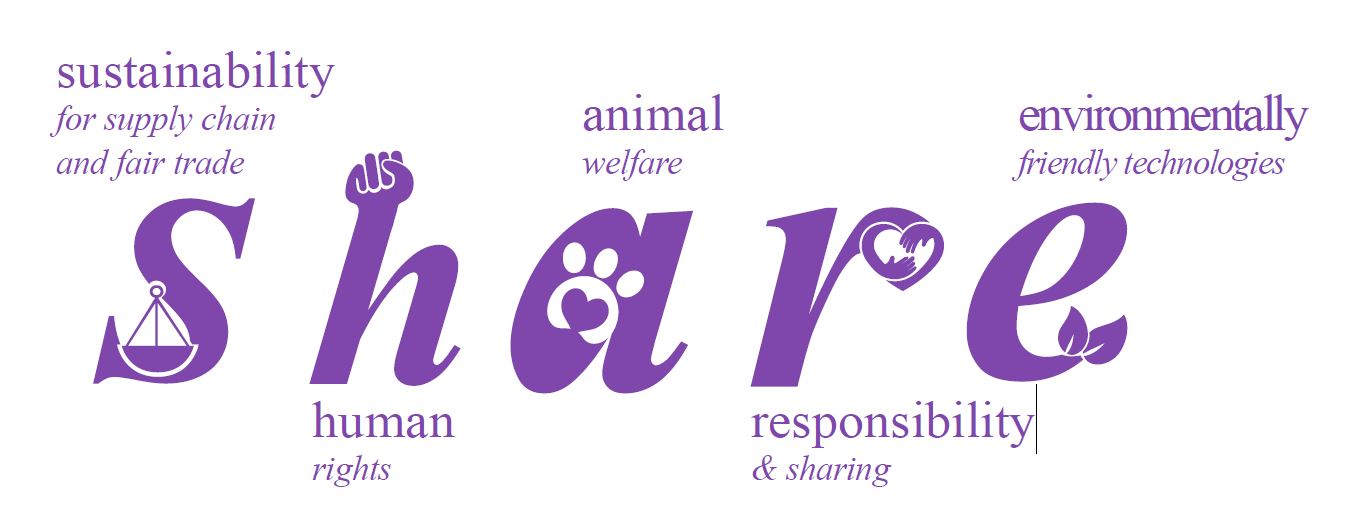
1. Sustainability for Supply Chain and Fair Trade:
The Company focuses on sustainable supply chain management in accordance with international standards so that its partners operate in accordance with the Company's sustainability practices, taking into account the management of environmental and social impacts, code of conduct, labor practices and fair trade.
2. Human Rights:
The Company is firmly committed to respect for and compliance with human rights principles in business operations and opposing all forms of human rights violations especially against child labor, forced labor and slave labor and various forms of human rights violations in the workplace. In addition, the Company also recognizes and places importance on safe working conditions and healthy well-being of all employees, as well as the care and development of employees to enhance work skills and develop more efficient work processes.
3. Animal Welfare:
The Company loves and cherishes all living creatures on this planet and has a firm commitment to “Protecting Every Touch with Care” through the gift of sharing and concern for creatures that are crippled, neglected or abused through donations and activities including activities related to the conservation of the ecosystem on an ongoing basis.
4. Responsibility & Sharing
The Company not only produces and delivers gloves of life to customers around the world, but also prides itself as an organization that strives and supports the building of a sustainable sharing society for a better world by focusing on participation in community and social development.
5. Environmentally and friendly Technologies
In addition to attention to production processes that meet international standards, the Company also focuses on using environmentally-friendly production technology by focusing on improving energy efficiency, using renewable energy in the production process, efficient water and waste management systems with regard to adding value and maximizing utilization, and reducing greenhouse gas emissions throughout the business value chain. This is the way forward in striving to become a low-carbon company, a green factory that is friendly to the environment and surrounding communities.
In order to drive and operate sustainability in a more tangible and challenging manner, since many goals have already been achieved, the Company has adjusted its sustainability goals to be in line with the business situation, strategies and business plans, which take into account the environment, society, economy and corporate governance, which will be adhered to and used as goals from 2026 onwards, as follows:
Sustainability Goals
Environment | |
Environmental Management Systems |
|
Climate Change Strategy |
|
Energy Management |
|
Air Quality Management |
|
Water and Effluent Management |
|
Waste Management |
|
Consideration of Ecosystems and Biodiversity |
|
Social | |
Human Rights and Non-Discrimination |
|
Workforce Management |
|
Human Capital Development |
|
Occupational Health and Safety in the Workplace |
|
Customers Relationship and |
|
Support and Participation with the Community |
|
Governance and Economics | |
Good Corporate Governance |
|
Anti-Corruption |
|
Cybersecurity and Data Privacy |
|
Risk Management and Business Continuity |
|
Sustainable Supply Chain Management |
|
Research Development and Innovation |
|
For guidelines and performance results regarding sustainability, additional information can be found in Section 3. Driving the Business towards sustainability and Sections 6-8 on corporate governance in this report, including in the 2025 sustainability report on the Company's website at https://www.sritranggloves.com/th/downloads/sd-report
Material Changes & Developments
Introduction
History
Our Company was formed on 1 April 2019 through the Amalgamation of Sri Trang Gloves (Thailand) Co., Ltd. and Thaikong Public Company Limited (“TK”).
Sri Trang Gloves (Thailand) Co., Ltd. was incorporated on 9 January 1989 under the name "Siam Sempermed Corporation Limited". The Company has engaged in business of manufacturing and distributing rubber gloves for medical use and other industries both in domestic and overseas. On 16 March 2017, STA acquired Semperit's stake in Siam Sempermed Corporation Limited and the name of the company was changed to
"Sri Trang Gloves (Thailand) Co., Ltd.”.
In order to further consolidate and restructure the rubber gloves business of the STA Group under our Company, on 28 June 2019, the Company acquired a 100.0% shareholding interest in SDME, engaged in distributing rubber gloves in the PRC, from a subsidiary of STA. On 30 September 2019, the Company acquired a 100.0% shareholding interest in STU, engaged in distributing rubber gloves in the US, from STA. In addition, on 7 January 2021, the Company acquired an aggregate 99.9992% shareholding interest in PSE from STA and RBL and a 99.9985% shareholding interest in PS from STA. PSE is principally engaged in the business of providing engineering services primarily to the Company and the STA Group, while PS does not have business operations, but holds land on which we intend to construct a glove factory.
The Company undertook an initial public offering exercise in Thailand and the Company has been primary listed on the SET under the symbol "STGT" on 2 July 2020. Thereafter, on 10 May 2021, the Company has been listed on the Main Board of the Singapore Exchange (SGX-ST) (Secondary Listing by Way of Introduction), without issuing and offering new shares, under the stock code “STG”, to expand and diversify the Company’s shareholder base, which will assist the Company in having an additional source of funds in the future and will increase the Company’s profile and visibility in the region.
As at 31 December 2025, the Company has a total 6 rubber gloves factories located in Thailand i.e. Hat Yai Branch Factory located at Hai Yai District, Songkhla Province, Surat Thani Branch Factory, Kanchanadit District, Surat Thani Province, Trang Branch Factory, Kantang District, Trang Province, Sadao P.S. Branch Factory, Sadao District, Songkhla Province, Anvar Branch Factory, Sadao District, Songkhla Province, and Chumphon Branch Factory, Pathio District, Chumphon Province with an installed capacity of 48,320 million pieces of rubber gloves per year.
Material Changes & Developments
| Year | Description |
|---|---|
| 1,989 |
|
| 1,993 |
|
| 1,996 |
|
| 1,997 |
|
| 1,999 |
|
| 2,003 |
|
| 2,005 |
|
| 2,007 |
|
| 2,008 |
|
| 2,009 |
|
| 2,011 |
|
| 2,012 |
|
| 2,013 |
|
| 2,014 |
|
| 2,015 |
|
| 2,016 |
|
| 2,017 |
|
| 2,018 |
|
| 2,019 |
|
| 2,020 |
|
| 2,021 |
|
| 2,022 |
|
| 2,023 |
|
| 2,024 |
|
| 2,025 |
|
Use of Proceeds from Securities Offerings
Introduction
(a) Utilization of Proceeds from the Equity Instrument
Following completion of the STGT ESOP project in 2022, the Company has not offered any additional equity instruments.
(b) Utilization of Proceeds from the Debt Instrument
The issuance of Green Debentures of Sri Trang Gloves (Thailand) Public Company Limited No. 1/2022 in the total amount of THB 1,500 million as of 28 September 2022. The Company would like to report the utilization of such proceeds ended of 31 December 2025 as follows:
Is There Money Raised from a Securities Offering Still to Report On?
Yes
Offerings
| Type of Securities | Amount Raised Given As | Amount Raised (Million Baht) | Uses of the Money | Used as Declared? | Progress / Reasons and Measures if Not Used as Declared | Related Link |
|---|---|---|---|---|---|---|
| Debt Instruments | 2873 | 1,500 | 2027-12 · Objective: For investment in the environmental projects relevant to the Company’s business operations. · Period type: 2871 · Start period: 2027-12 · Spent amount type: 2873 · Start spent amount: 1500.0 · Expected amount type: 2873 · Start expected amount range: 1500.0 | Y | As of 31 December 2025, the Company has utilized the proceeds from green debentures issuance in the amount of THB 1,500 million for investment in environmental projects include: 1) Renewable Energy; 2) Pollution Prevention and Control; 3) Energy Efficiency; 4) Sustainable Water and Wastewater Management; and 5) Clean Transportation. | https://www.sritranggloves.com/en/downloads/sd-report |
Commitments Made in the Registration Statement
Are There Commitments or Conditions from an Offering or Listing?
No
Group Operating-Structure Policy
Description
The Company mainly engages in the business of manufacturing and distributing rubber gloves for medical and industrial purposes consisting of Natural Rubber Powdered (NRPD), Natural Rubber Powdered-Free (NRPF), and Nitrile Butadiene Rubber (NBR) gloves. In addition to distributing products through qualified distributors in each country, the Group Company also distributes rubber gloves under the brands of the Company and its subsidiaries, as well as distributes them in the form of OEM to customers in more than 175 countries worldwide.
As of 31 December 2025, the Company has 9 subsidiaries in total. The shareholding structure is as follows:
Companies Where the Company Holds ≥10%
Companies (≥10% Holding)
| Company Name | Address | Province | Zip Code | Telephone | Fax | Business Type | Security Type | Shares | Paid-up Shares |
|---|---|---|---|---|---|---|---|---|---|
| Shidong Shanghai Medical Equipment Co., Ltd. (SDME) | 5F East, Block B, W square No.1686 Wuzhong Road, Minhang District, Shanghai, People’s Republic of China | Foreign country | 8621-64137860-616 | 8621-64137315 | Distribution of rubber gloves in People’s Republic of China | Other | 0 | 0 | |
| Sri Trang USA, Inc. (STU) | 410 North Michigan Avenue, Suite N740 Chicago, IL 60611 | Foreign country | +1 (813) 606-4301 | Distribution of rubber gloves in United State of America | Common shares | 11,500 | 11,500 | ||
| Premier System Engineering Co., Ltd. (PSE) | 123 Moo 8, Kanjanavanit Road, ban Phu, Hat Yai, Songkhla, Thailand 90250 | Songkhla | 90250 | 0-7422-2900-9 | 0-7422-2910-12 | Engineering services, design, production, distribution, installation, and maintenance of machineries | Common shares | 500,000 | 500,000 |
| Sri Trang Gloves (Singapore) Pte. Ltd. (STGS) | 50 Raffles Place #16-03 Singapore Land Tower, Singapore | Foreign country | 65-6532-5210 | Distribution of rubber gloves and research and development (R&D) | Common shares | 1,000,000 | 1,000,000 | ||
| Sri Trang Gloves Global Pte. Ltd. (STGG) | 50 Raffles Place #16-03 Singapore Land Tower, Singapore | Foreign country | 65-6532-5210 | Financial asset management and financial investment | Common shares | 20,000,000 | 20,000,000 | ||
| PT Sri Trang Gloves Indo (STGI) | Jalan TPA2, RT.26 & 29 Keramasan, Palembang, South Sumatera, Palembang, 30259, Indonesia | Foreign country | 62-711-445-666 | 62-711-445-222 | Distribution of rubber gloves in Indonesia | Common shares | 1,000,000 | 1,000,000 | |
| Sri Trang Gloves Vietnam Co., Ltd. (STGV) | 46 Cao Ba Nha Street, Cau Ong Lanh Ward, Ho Chi Minh City, Vietnam | Foreign country | +84 28730 789 29 | - | Distribution of rubber gloves in Vietnam | Other | 0 | 0 | |
| Sri Trang Gloves Philippines Inc. (STGP) | 32nd Floor, Unit 3207, Robinsons Equitable Tower, ADB Avenue corner Poveda Street, Ortigas Center, Pasig City, Philippines. | Foreign country | 63-919-000-6533 | Distribution of rubber gloves in Philippines | Common shares | 278,701 | 278,701 | ||
| Sri Trang Gloves Global Pte. Ltd. (STGG) | 50 Raffles Place #16-03 Singapore Land Tower, Singapore | Foreign country | 65-6532-5210 | Financial asset management and financial investment | Preferred shares | 235,000,000 | 235,000,000 | ||
| Shidong Medical Equipment (Suzhou) Co., Ltd. (SDMES) | Floor 1, Building 1, Taicang Minghao Science and Technology Industrial Park, No.58, Shengyuan Road, Chengxiang Town, Taicang City, Suzhou City, Jiangsu Province | Foreign country | - | Packaging and Distribution of rubber gloves | Other | 0 | 0 |
Relationships Among Major Shareholders
Introduction
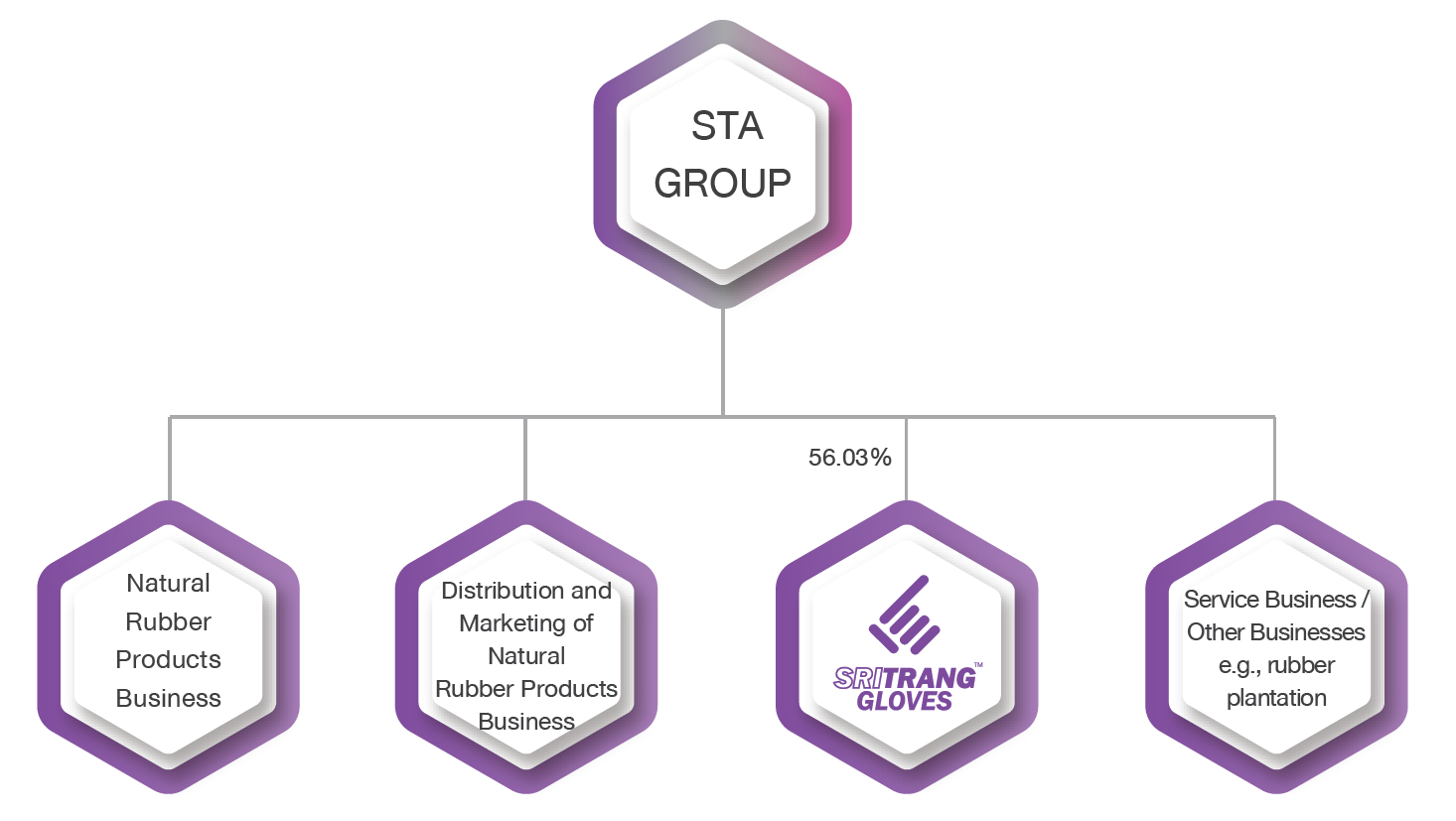
As of 31 December 2025, STA Group has shareholding proportion in the Company of 56.03 percent in total. The relationship between the Company and STA group can be shown as follows.
Relationship Exists (Y/N)
Yes
Description
Following its restructuring according to the plan to list in the SET since 2020, the Company and STA have clearly separated their scope of business whereby the Company is the flagship company of the STA Group engaged in the production and sale of latex gloves, while STA is engaged in the business of producing and distributing latex and other natural rubber products such as rubber sheets and block rubber, etc., including the rubber plantation business. STA has a policy not to engage in business that is in competition with the rubber gloves manufacturing and distribution business of the Company and its subsidiaries and will ensure that STA's subsidiaries also do not engage in any such competing business as well.
At present, the Company procures the main raw material, namely concentrated latex, from the STA Group to produce powdered natural latex gloves and powder-free natural latex gloves under the concentrated latex purchase agreement with companies in the STA group. In addition, the Company also purchases other raw materials, such as firewood to be used as fuel in the production process from companies in the STA group under the firewood purchase agreement with companies in the STA group. In addition, the STA Group also provides other business support to the Company, such as intercompany transportation services, renting of warehouses, equipment, offices, and others, as well as information technology services, etc. Such inter-company transactions with the STA Group are based on transparent and fair market prices and trade conditions aimed at protecting the interests of the Company and shareholders of the Company.
Income Structure
Introduction
The primary revenue from the Company's business consists of (1) revenue from the business of manufacturing and distribution of rubber gloves (2) revenue from services and (3) other income. The Company's revenue structure for the year ended 31 December 2023, 2024, and 2025 can be shown as follows.
Product / Service Income
| Category | Description | This Year | This Year % | Last Year | Last Year % | 2 Years Ago | 2 Years Ago % |
|---|---|---|---|---|---|---|---|
| Total revenue from operations | Total revenue from operations | 24,122,091.89 | 100 | 25,882,283.93 | 100 | 20,243,564.3 | 100 |
| Production and Distribution of Rubber Gloves | 23,778,803.76 | 98.58 | 24,785,355.95 | 95.76 | 19,034,037.77 | 94.03 | |
| Services | 111,478.64 | 0.46 | 216,769.19 | 0.84 | 631,137.63 | 3.12 | |
| Others | 231,809.49 | 0.96 | 880,158.79 | 3.4 | 578,388.9 | 2.86 | |
| Other | Other | 0 | 0 | 0 | 0 | 0 | 0 |
Export Income
| Category | Description | This Year | This Year % | Last Year | Last Year % | 2 Years Ago | 2 Years Ago % |
|---|---|---|---|---|---|---|---|
| Total revenue | Total revenue from operations | 24,122,091.89 | 100 | 25,882,283.93 | 100 | 20,243,564.3 | 100 |
| Domestic | Domestic | 2,352,008.48 | 9.75 | 2,171,513.67 | 8.39 | 2,463,277.92 | 12.17 |
| International | International | 21,770,083.41 | 90.25 | 23,710,770.26 | 91.61 | 17,780,286.38 | 87.83 |
Other Income
| Operating Other Income | Non-Operating Other Income | Share of Profit |
|---|---|---|
| 1710 · As of year: 236460.79 · Description: Total other income · As of yesteryear: 614973.37 · As of year before yesteryear: 214372.29 · 1711 · As of year: 236460.79 · Description: Other income from operations · As of yesteryear: 614973.37 · As of year before yesteryear: 214372.29 | 1712 · As of year: 0.0 · Description: Other income not from operations · As of yesteryear: 0.0 · As of year before yesteryear: 0.0 | 1713 · Description: Share of profit |
Product / Service Characteristics
Introduction
The business operation of the Company can be divided into 2 businesses according to the product type as follows:
Business Type
3114
Business Groups
| Business Group | Description |
|---|---|
| (1) Manufacturing and distribution of natural rubber gloves | Natural Rubber Glove (NR) is a type of rubber glove which is produced by concentrated natural rubber latex. NR gloves have a characteristic of flexibility, comfort in wearing (Relaxation) as well as being biodegradable that is considered to be better than nitrile butadiene gloves. The NR gloves that the Company produces and sells can be divided into 2 main types as follows: (1.1) Natural Rubber Powdered Glove (NRPD) These are NR gloves that are coated with powder on the inside for donning comfort. In most cases, corn flour is used as the raw material as it does not contain any harmful substance and is food safe. In addition, the production process for NRPD is less complex than NRPF and NBR, resulting in NRPD having lower production costs than the other types of rubber gloves. (1.2) Natural Rubber Powder Free Glove (NRPF) It is an alternative product developed for individuals who prefer to avoid the use of powder. It uses technology to coat the contact surfaces inside the rubber gloves to provide ease in wearing without cornstarch. It is particularly suitable for individuals with potential powder allergies or applications that require avoiding powder residues. |
| (2) Manufacturing and distribution of nitrile butadiene rubber gloves | NBR glove is a rubber glove which is produced using Nitrile Butadiene Rubber or NBR latex, a synthetic type of latex, as the main raw material. The NBR are strong, tearing and puncture resistant, and better resistant to chemicals and temperature changes than NR gloves. It is also an alternative product for who are prone to proteins allergy from natural rubber. The only form of NBR gloves that the Company produces is powder-free NBR. NR gloves and NBR gloves that the Company produces and sells can be classified according to the nature of use into 3 main categories: rubber gloves for use in general medical examination (Examination Glove), rubber gloves for surgical use (Surgical Gloves) and rubber gloves for industrial use (Industrial Glove) such as in the food industry, beauty industry, electronic industry and agriculture industry etc. Each type of rubber gloves may have different properties depending on the nature of use. The rubber gloves the Company manufactures and distributes are mainly latex gloves for medical use. In 2025, the Company produces NR gloves and NBR in the form of OEM accounted for 82.3 percent of total revenue from the production and distribution of rubber gloves as well as under the trademarks owned by the Company and its subsidiaries and companies in the STA group to both domestic and foreign customers accounted for 17.7 percent of total revenue from the production and distribution of rubber gloves. The Company has produced and distributed natural rubber gloves and NBR gloves under the brands of the Company and its subsidiaries such as Sri Trang Gloves, SRI TRANG GLOVES, Satory, I'M GLOVE, Fin, Super Care, S-Gloves, Sriex, SRITECH, and Ventyv etc. The Company has the capability to produce NR and NBR gloves with a wide range of properties, ranging from size, weight, thickness, length, contact surface and other special properties such as surgical gloves, low-protein gloves, extra-long cuff gloves, and diamond-textured gloves that are used in the industrial sector in order to meet the diverse demands of customers worldwide.
|
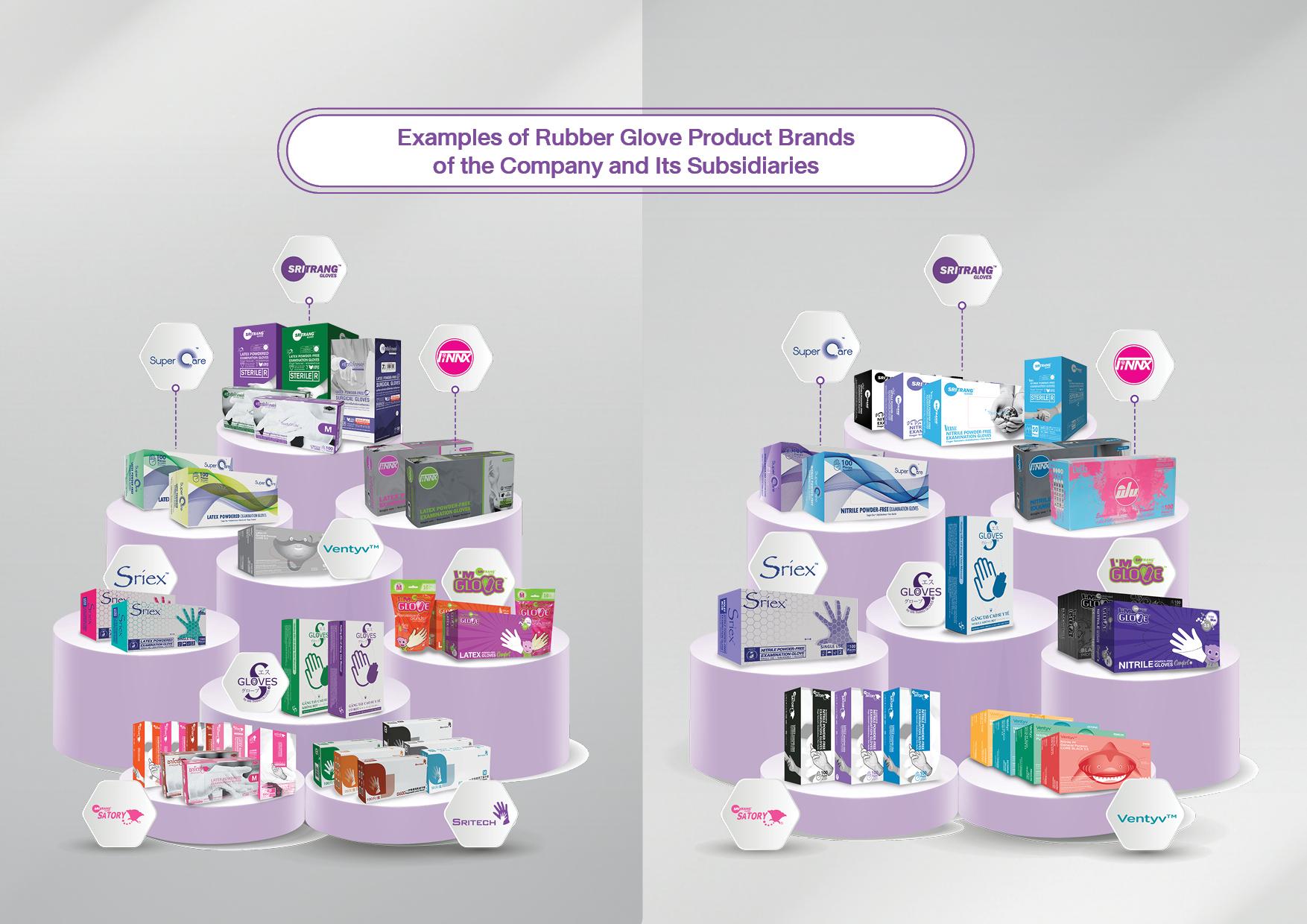
Research & Development
Has R&D Policy (Y/N)
Yes
Introduction
Research and Innovation Development is one of the Company’s sustainability goals and material topics. The Company places strong emphasis on and provides support for research and innovation initiatives covering product development; natural rubber latex and nitrile latex formulation, glove formers, production process improvement, and work-process enhancement and mindset transformation. These efforts aim to improve production efficiency, create added value, reduce costs, and/or reduce resource consumption, while generating business opportunities, supporting new business directions, and strengthening long-term competitiveness. They also contribute to sustainable business operations and environmental responsibility.
R&D Cost — Description
The research and innovation development expenses of the Company and its subsidiaries are as follows:
In 2023, the Company and its subsidiaries had 28 successful innovation projects, each with potential for further development, with total research and innovation development expenses of THB 32.5 million.
In 2024, the Company and its subsidiaries had 31 successful innovation projects that could be further developed, with total research and innovation development expenses of THB 74.0 million.
In 2025, the Company and its subsidiaries had 51 successful innovation projects that could be further developed, with total research and innovation development expenses of THB 67.0 million.
Examples of Innovation Research and Development Projects
1. Product-related Projects
To address the increasing variety of glove applications among users and to maintain the Company’s leadership in the rubber glove industry under the “Clean World Clean Glove (CWCG)” concept, the Company continues to innovate and enhance product value through environmentally friendly and safe solutions. The Company has developed natural rubber products using environmentally responsible production processes. One example is the Latex Powder Free glove produced with Online Polymer Coated technology, a process that eliminates chlorine use and prevents chlorine residue. This reduces the risk of skin irritation, minimizes environmental impact, and enhances product quality to meet international standards. In addition, the Company has expanded its Specialty Gloves portfolio to better meet diverse consumer needs. The Company now offers 88 product types, up from 71 products, such as Surgical Gloves, Diamond Texture nitrile gloves for industrial customers, Double Chlorination natural rubber gloves, Online Polymer Coated natural rubber gloves, and Long Cuff natural rubber gloves.
In 2025, the Company enhanced and further developed several existing products to better meet user requirements, including improving Surgical Gloves to allow medical personnel to wear double layers more comfortably, producing Long Cuff Latex Powder-Free gloves to enhance user safety, and developing Nitrile Gloves with Diamond Texture for industrial applications. The Company also continues to prioritize product quality improvement to ensure compliance with international standards as well as country-specific requirements, thereby strengthening user confidence and supporting stable and sustainable business growth.
2. Projects Related to Automation, Digital Transformation, and Artificial Intelligence (AI)
The Company promotes and invests in the adoption of advanced knowledge and technologies across Automation, Digital Transformation, and AI to enhance organizational productivity and improve production efficiency. These technologies support the optimal use of limited resources, reduce labor requirements, lower production costs, improve data accessibility for faster decision-making, and strengthen the Company’s competitiveness in the market.
In 2025, the Company further developed and expanded the existing projects, such as the Glove Defect Detection project, which uses Vision Cameras together with AI Vision Deep Learning to detect and sort gloves that do not meet quality standards. This helps reduce in-process QC, while also providing real-time reporting to support timely and accurate decision-making. Another example is the Smart Energy System project, which developed a Dashboard Monitoring System integrated with sensors to collect and monitor energy usage in real time at 100% coverage. In addition to enabling faster decision-making, the system also helps reduce electricity costs by approximately THB 600,000 per year. All data have been stored in digital format within the Data Center and are ready to support future AI applications. Overall, the Company’s Automation, Digital Transformation, and AI projects have helped increase productivity, reduce costs, lower energy consumption, minimize human error, and enhance data-driven management through real-time information. The collected data have been established as a foundation to support future AI development and the Factory of the Future.
Gloves Defect Detection Project
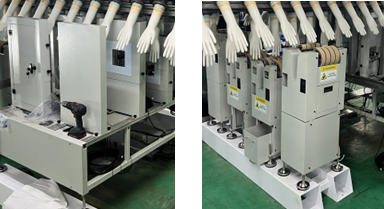
Smart Energy System Project
3. Projects Supporting Business and Environmental Conservation
The Company is committed to achieving business growth alongside long-term environmental stewardship. Accordingly, the Company places strong emphasis on developing and applying innovations throughout its operations to support its environmental objectives. Examples include reducing chlorine usage in the nitrile glove production process, which helps lessen ecological impacts and promotes more environmentally friendly manufacturing practices, and the QC Digitization Transformation project, which replaced paper-based QC procedures with mobile and digital systems linked via QR codes and the SAP system. This enables real-time tracking and reporting, increases productivity and reduces paper usage to zero, resulting in a 45% reduction in related costs. The project has now been implemented across all factories.
QC Digitization Projects
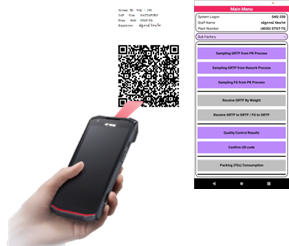
In addition, the Company has promoted the development of intellectual property by filing patent applications with the Department of Intellectual Property for innovations related to medical rubber gloves, both Thailand and abroad. As of 31 December 2025, the Company had submitted a total of 3 invention patent applications.
R&D Cost — Label
Research and development (R&D) expenses over the past 3 years (Million Baht)
R&D Cost — This Year
67
R&D Cost — Last Year
74.0
R&D Cost — 2 Years Ago
32.5
Assets Used in the Business
Permanent Assets — Description
1) Assets used in Business Operation
As of 31 December 2024, and 31 December 2025, the Company has fixed assets to operate its business consisting of land and land improvements, buildings and construction, machinery and equipment, vehicle, furniture and office equipment, assets under construction and installation. The net book value of which after deduction accumulated depreciation and impairment losses shown in the consolidated financial statements is in the amount of THB 23,858.0 million and THB 22,035.3 million as follows.
Permanent Assets — Appraisal
| Asset | Ownership | Obligation | Appraisal Value | Description |
|---|---|---|---|---|
| Land and Land improvements | Ownership | None | 3,000.67 | Unit : THB Million |
| Buildings and Construction | Ownership | None | 5,698.17 | Unit : THB Million
|
| Machine and Equipment | Ownership | None | 10,573.25 | Unit : THB Million
|
| Vehicle | Ownership | None | 132.12 | Unit : THB Million
|
| Furniture and Office Equipment | Ownership | None | 162.88 | Unit : THB Million
|
| Assets under Construction and Installation | Ownership | None | 2,468.19 | Unit : THB Million
|
| Right of use under lease agreement | No ownership | None | 97.92 | Unit : THB Million |
Intangible Assets — Description
As of 31 December 2024, and 31 December 2025, the net book value of computer software in the consolidated financial statements is as follows.
Intangible Assets — Appraisal
| Asset | Type | Appraisal Value | Description |
|---|---|---|---|
| Computer Software | Copyright | 162.86 | Unit : THB Million
|
Has Subsidiaries Investment Policy (Y/N)
Yes
Subsidiaries Investment Policy — Description
The Company has a policy to invest in companies in accordance with its goals, visions and strategy on growth in order to enhance operating results or profitability. The Company intends to invest in synergy for the enhanced competitiveness of the Company, and to enable the achievement of the goal of becoming a leader in the core business of the Company. The Company, its subsidiaries and/or associate companies may consider an investment in additional businesses that have potential growth and scalability or will be beneficial for the business of the Company with a good return on investment. The Company will carry out feasibility of the investment including potential and risk factors associated with the investment. The Company will follow an appropriate procedure for the investment, which shall be consented to and/or approved by the meeting of the Executive Committee, the Board of Directors or the general meeting of shareholders (as the case may be). The approval for the investment in subsidiaries and/or associate companies shall be in accordance with the relevant notifications of the Capital Market Supervisory Board and Board of Governors of the Stock Exchange of Thailand.
At present, the Company does not have any associate companies. If the Company invests in another company in the future which causes other company to become associate company, the Company will establish the policy using the same guidelines as the above policy.
More details about “the Policy for the investment in subsidiaries and associate companies” are available on the Company’s website at https://www.sritranggloves.com/en/documents/corporate-policy, as well as the performance regarding governance, management, and operational responsibilities of the subsidiaries and associate companies can also be found in Section 8.1.3 Supervision of subsidiaries and associated companies of this Annual Report.
Marketing Policy & Competition
Reporting Mode
3117
Marketing Policy (Overall)
Marketing and Competitions
Marketing and Distribution Channels
The Company produces and distributes natural and nitrile rubber gloves both in Thailand and abroad. The majority income of the Company derives from distribution of products to overseas. The main markets of the Company include Asian countries, the United States of America, Europe, and South America. Revenue from production and distribution of natural and nitrile rubber gloves, both in Thailand and abroad, for the year ended 31 December 2023, 2024, and 2025 which can be classified as follows:
Revenue | 2023 | 2024 | 2025 | |||
THB Million | Percent | THB Million | Percent | THB Million | Percent | |
Revenue from domestic sales | 1,830.6 | 9.6 | 1,954.7 | 7.9 | 2,240.5 | 9.5 |
Revenue from international sales | 17,148.3 | 90.4 | 22,775.2 | 92.1 | 21,362.5 | 90.5 |
*Total revenue from production and distribution of rubber gloves | 18,978.9 | 100.0 | 24,729.9 | 100.0 | 23,603.0 | 100.0 |
Remarks: *Excluding the value from cash flow hedge.
The Company distributes rubber gloves domestically and internationally through two channels: (1) sales under the brands of the Company and its subsidiaries, and (2) OEM manufacturing, as follows:
(a) Rubber gloves under the brands of the Company and its subsidiaries
The Company distributes natural rubber gloves and nitrile gloves under the brands of the Company and its subsidiaries, such as Sri Trang Gloves, SRI TRANG GLOVES, Satory, I’M GLOVE, FIN, Super Care, S-Gloves, Sriex, SRITECH, and Ventyv, both in Thailand and abroad. Most are distributed through dealers with high potential in each country which includes both third-party distributors and subsidiaries of the Company. In this regard, the distributors will distribute products to consumers through various channels such as hospitals, pharmacies and medical equipment outlets, clinics, and restaurants, etc.
In addition to distribution through potential distributors in each country, the Company and its subsidiaries also distributes rubber gloves under the brands of the Company and its subsidiaries directly to customers in Thailand, the People's Republic of China, Vietnam the United States, Singapore, Indonesia, and Philippines via modern trade, convenience stores and online channels, as well as direct distribution of products to such customers as hospitals, drugstores and medical equipment outlets, clinics, restaurants, hotels, and aesthetic center etc.
(b) Rubber gloves under OEM contracted manufacturing
The Company distributes natural and nitrile rubber gloves that it produces under OEM contracted manufacturing through dealers in Thailand and abroad whereby the dealers distribute products to other distributors or to consumers such as hospitals, clinics, pharmacies and medical equipment outlets, retail stores (Modern Trade), convenience stores. The Company's OEM business operates from the production of rubber gloves until the process of packaging the products and attaching the trademark of the outsourcing manufacturer.
Marketing for the Company’s OEM business is done by direct contact to the dealers through the Company’s marketing team which has the required experience, knowledge, and capability in negotiating with the dealer to offer a wide range of rubber glove products and detailed product information, including asking for information regarding customers' needs in order to develop products to meet their specific needs. The Company also participates in not just the medical equipment expos but also consumer products, food and beverages, beauty, and dental fair for both domestic and abroad.
Revenue from manufacturing and distributing rubber gloves under the brands of the Company, its subsidiaries, and OEM contracted manufacturing of rubber gloves for both domestic and foreign customers for the year ended 31 December 2023, 2024, and 2025 can be classified as follows:
Revenue | 2023 | 2024 | 2025 | |||
THB Million | Percent | THB Million | Percent | THB Million | Percent | |
Revenue from production and distribution of rubber gloves under the brands of the Company's and its subsidiaries (OBM) | 4,451.5 | 23.5 | 4,494.8 | 18.2 | 4,185.1 | 17.7 |
Revenue from OEM contracted manufacturing | 14,527.4 | 76.5 | 20,235.1 | 81.8 | 19,417.9 | 82.3 |
*Total revenue from production and distribution of rubber gloves | 18,978.9 | 100.0 | 24,729.9 | 100.0 | 23,603.0 | 100.0 |
Remarks: *Excluding the value from cash flow hedge.
Industry & Competition (Overall)
Industry and Competition
Rubber Glove Industry Competition
The COVID-19 outbreak, beginning in 2019, led to a sharp increase in global demand for rubber gloves. This resulted in existing manufacturers accelerating capacity expansion and a significant number of new entrants joining the market during 2020–2022 to meet the sudden surge in demand. As the COVID-19 situation gradually eased, demand returned closer to normal levels, while the newly added capacities continued to enter the market. Consequently, industry competition intensified, and excess supply emerged.
In response to these conditions, many leading manufacturers began adjusting their production strategies from 2023 to 2024, such as delaying or cancelling new investment plans, suspending or decommissioning older and less efficient production lines, and investing in advanced manufacturing technologies to enhance cost efficiency and product quality. These adjustments have supported the industry’s transition toward a more balanced environment, with demand growing gradually and becoming more stable.
However, in 2025, international trade policies played a significant role in shaping the industry’s competitive landscape. The United States announced the US Reciprocal Tariff on various trading partners, prompting customers in the United States to rebalance their orders toward producers that benefit from more favorable tariff rates, including Thailand. Nevertheless, during the normalization period of supply and demand, price competition in other global markets remains a challenge for the Company, as an export-oriented manufacturer.
Overview of the Rubber Glove Industry
Rubber gloves are widely used in a variety of industries such as the medical industry, food industry, electronic industry, beauty industry, and tourism industry, etc. This is because rubber gloves are classified as one of the devices that help to effectively protect against pathogens, chemicals, as well as various contaminants. At present, the rubber gloves generally produced and used can be classified according to 3 main raw materials i.e. powdered and non-powdered natural rubber gloves, nitrile rubber gloves and vinyl gloves. However, if considers the type of rubber gloves based on usage, they can be divided into 3 main types as follows:
(1) Medical Glove
These are rubber gloves used for medical purposes which can be divided into 2 types:
Surgical Glove
Surgical Glove are single-use, disposable rubber gloves that are sturdy, of elbow length, produce in both left- and right-hand feature, and must be sterilised by gamma rays. The production of surgical gloves requires relatively advanced technology and is produced using distinct left-hand and right-hand molds. As sterile gloves with enhanced properties compared to rubber gloves used in general examinations. Surgical gloves are generally made of natural rubber.
Examination Glove
Examination Glove are cheaper than surgical gloves. These are designed to be unwrapped quickly, easy to put on and ambidextrous. They are also single-use and disposable, thin fit and of wrist length. Examination gloves can either be made of natural rubber, which can either be powdered or powder-free, or nitrile gloves. Powdered natural rubber gloves are cheaper than powder-free natural rubber gloves and nitrile gloves. Natural rubber gloves have better elastic properties than synthetic rubber. However, nitrile gloves are stronger, more resistant to tearing and puncture and are more resistant to chemicals, petroleum oils, various non-polar solvents, and temperature changes than natural rubber gloves. Nitrile and powder-free natural rubber gloves are alternatives for wearers who are allergic to natural rubber and/or powder.
(2) Industrial Glove
Different industries require rubber gloves with different specific characteristics. For example, in the food industry, rubber gloves may require specific properties to meet the standards in food production processes in different countries, such as Good Manufacturing Practice ("GMP"), Safety Quality Management System, Hazard Analysis and Critical Control Point ("HACCP") and Halal Food Standards. In other industries such as the electronics industry, latex gloves must be thin and tight with properties that help to prevent dust particles and various contaminants from entering the electronics products, including other industries such as travel and hotel, and shopping mall etc.
(3) Household Glove
These rubber gloves must be tough, durable, and thick because of their frequent contact with detergents and cleaning agents. In addition, these gloves are designed to last for a long time and can be reused.
Demand of the Rubber Glove Industry
Demand for rubber gloves is expected to continue growing at an average rate of 5 - 8% per year, driven primarily by the medical industry and by increasing usage across other hygiene-related sectors and service industries requiring hand contact, such as food manufacturing and processing, electronics, restaurants, elderly care, and beauty services.
During the COVID-19 pandemic, global demand for rubber gloves rose sharply above pre-pandemic averages due to accelerated stockpiling by distributors and consumers worldwide. However, the market experienced a correction during 2022–2024 as inventories were drawn down, and demand began returning to a more balanced level from 2025 onward, supported by normalized inventory levels, the resumption of new orders (restocking), and continued widespread glove usage. This includes new user groups from the COVID-19 period who became more accustomed to hygiene-related products and have maintained this behavior.
In the long term, rubber glove demand is supported by two key factors: (1) Growth of the Healthcare Industry, and (2) the expansion of hygiene-related product usage and hand-contact service industries, especially in developing countries. The details are as follows:
(1) Growth in the Healthcare Industry
Growth of the healthcare industry is a key factor supporting global demand for rubber gloves since latex gloves are essential in every stage of a medical service, such as disease screening, diagnosis laboratory tests and disease treatment procedures including the provision of other medical services. According to the OECD Health at a Glance 2025 report published by the Organization for Economic Co-operation and Development (OECD), health expenditure among OECD member countries accounted for 9.3% of GDP in 2024. Although this was slightly lower than the 9.6% recorded during 2020–2021, it remained higher than the pre-COVID-19 level of 8.8%. Major markets in the medical industry, including the United States, one of the largest markets for rubber gloves—reported health expenditure of as high as 17.2% of GDP. In addition, approximately 75% of all health spending in OECD countries is funded through government or compulsory health insurance schemes, rather than out-of-pocket payments or private insurance. This indicates that many governments continue to support public healthcare expenditure, enabling broader and more accessible healthcare services for their populations.
(2) Ageing Population
The number of elderly populations around the world is steadily increasing. The World Health Organization (WHO) projects that the number of people aged over 60 worldwide will increase from 1 billion in 2020 to 1.4 billion in 2030 and 2.1 billion in 2050. WHO also forecasts that between 2020 and 2050, the number of people aged over 80 will triple, reaching 426 million. In addition, from 2015 to 2050, the population aged over 60 is expected to double. The growth of the elderly population is closely linked to higher usage of rubber gloves, as a result of the increased healthcare needs of this demographic group.
(3) Increasing Access to Healthcare Services Worldwide
Improving access to healthcare services in developing countries represents an increasing growth opportunity for the global medical industry. According to the World Health Statistics 2025: Monitoring Health for SDGs, Sustainable Development Goals report published by the World Health Organization (WHO), the Universal Health Coverage (UHC) Service Coverage Index increase from 54 points in 2000 to 71 points in 2023 and is projected to reach 74 points in 2030. This trend reflects a global commitment to expanding public access to healthcare services in all regions.
(4) Rising Prevalence of Non-communicable Diseases (NCDs)
The increasing prevalence of non-communicable diseases (NCDs) worldwide remains a significant factor driving the growth of the global medical industry, which in turn contributes to the continued rise in demand for rubber gloves. According to the 2024 report by the World Health Organization (WHO), NCDs caused more than 43 million deaths in 2021, accounting for approximately 75.0 percent of all non-pandemic-related deaths globally. Cardiovascular diseases were the leading cause, with at least 19 million deaths, followed by cancer with 10 million deaths, chronic respiratory diseases with 4 million deaths, and diabetes with more than 2 million deaths. These four major disease groups are primary causes of premature mortality. In addition, 73 percent of NCD-related deaths occur in low-and middle-income countries, and 82 percent of premature deaths from NCDs also arise within these countries.
(5) Outbreaks of Severe Communicable Diseases and the Risk of Re-emergence
Over the past twenty years, the world has faced multiple outbreaks of severe communicable diseases. Examples include the Severe Acute Respiratory Syndrome (SARS) outbreak during the period 2002 to 2003, which resulted in more than 8,000 infections; the Influenza A (H5N1) avian influenza outbreaks that began in 2004 and intensified during the period 2005 to 2007, with approximately 800 reported cases according to the WHO; the Influenza A (H1N1) pandemic during the period 2009 to 2010, with more than 490,000 infections worldwide; and the Middle East Respiratory Syndrome (MERS), which emerged in 2012 in the Middle East and saw a severe wave in early 2014, with more than 2,500 cases. In addition, since late 2019, the world has confronted another major outbreak caused by the coronavirus disease 2019 (COVID-19). Although the pandemic is now under control, new infections continue to be detected, while the severity in terms of mortality has shown a declining trend.
In addition, monkeypox (Mpox) is another disease that the World Health Organization (WHO) has reported as continuing to spread in several countries worldwide since 2022, particularly in regions of Africa and North America. Although Mpox is not a newly emerging disease, recent outbreaks have been associated with close contact among high-risk groups. Other infectious diseases have also continued to circulate, such as Human Metapneumovirus (hMPV), a virus that affects the respiratory system, particularly young children, the elderly, and individuals with weakened immune systems. The outbreak of hMPV increased during the winter season in China in 2023 to 2024, resulting in a significant rise in hospital admissions. Although the disease is generally not life-threatening, hMPV is highly transmissible and can cause pneumonia. These outbreaks highlight the importance of hygiene measures and infection-prevention practices, especially in healthcare facilities and related industries. Increased awareness of hygiene and strict infection-control protocols continues to support demand for rubber gloves, as they remain essential equipment for disease screening, diagnosis, laboratory testing, medical procedures, and various protective uses.
(6) Growth in the Use of Hygiene-Related Consumer Products, Particularly in Developing Countries
Economic growth in developing countries is a key factor supporting household spending and improving quality of life. According to the World Economic Outlook published by the International Monetary Fund (IMF) in October 2025, the real GDP growth rate of developing countries in Asia was 4.7 percent, higher than other regions and above the global average of 3.1 percent. This economic expansion enables consumers in developing countries to place greater emphasis on hygiene and public health. The COVID-19 pandemic was a major catalyst that reshaped consumer behavior worldwide, particularly by increasing awareness and usage of hygiene-related products. Rubber gloves, which are essential in both medical and non-medical sectors such as the food industry, beauty industry, and electronics industry have become increasingly important. As a result, rubber glove consumption in developing countries continues to exhibit strong growth potential, driven by rising income levels, heightened awareness of hygiene, and expanding usage beyond medical purposes. This growth includes widespread glove usage in households, the food industry, the beauty industry, the electronics sector, and agricultural activities.
Supply of Rubber Gloves Industry
The global supply of the rubber glove industry depends on the following factors:
(1) Rapid Capacity Expansion During 2020 to 2022 and Subsequent Industry Adjustment
During the COVID-19 outbreak starting in 2020, global demand for rubber gloves increased sharply. Manufacturers worldwide, including new entrants from Malaysia, China, and the Company itself, accelerated significant capacity expansion driven by high selling prices and strong profit margins. As a result, the industry experienced a rapid increase in production capacity during the period 2020 to 2022. After the COVID-19 situation eased, rubber glove prices and profit margins declined, while newly added capacities continued to enter the market. This led to periods of excess supply beginning in 2022. Consequently, many manufacturers started reassessing their investment plans. During 2023 to 2024, several producers slowed down or cancelled expansion projects, suspended or decommissioned inefficient production lines, and invested in new, more advanced production technologies with improved cost competitiveness. These adjustments helped the industry move toward a more balanced supply-demand environment. However, in 2025, some rubber glove manufacturers began to resume capacity expansion in certain locations, resulting in an increase in the industry’s overall supply compared with previous levels.
(2) The Adequacy and Price of Raw Materials
The sufficiency and price of raw materials used in the manufacture of rubber gloves is another factor affecting the supply of rubber gloves. Particularly in the current situation, where the world's climate is fast changing, affecting the production of natural rubber, which may not be in the quantity that manufacturers require and the competitiveness of the global rubber glove manufacturers. The main raw materials used in the manufacture of rubber gloves are concentrated latex for the production of natural rubber gloves and synthetic latex for the production of nitrile rubber gloves.
Concentrated Latex Demand for latex will vary with the growth of downstream rubber products which use concentrated latex as the main raw material in the production process, such as condoms, elastic yarn, rubber nipples, balloons, adhesives, and rubber gloves. Concentrated latex’s demand also varies with substitute raw materials in downstream product manufacturing processes, such as in the case of rubber gloves, synthetic latex can be used in the manufacture of rubber gloves that can serve the same purposes as natural rubber gloves. Therefore, the change in demand and supply, including the price of raw materials to replace the concentrated latex, indirectly affects the demand for concentrated latex in the market. The price of concentrated latex varies with the change in demand and supply of natural rubber both domestically and abroad because concentrated latex is a product made from natural rubber. Additionally, rapid climate changes and shifts in agricultural practices can impact natural rubber yields, potentially affecting production volumes. For instance, El Nino leads to drought conditions in regions such as Southeast Asia and northern Australia, resulting in reduced natural rubber yields from these areas. Conversely, La Nina brings increased rainfall and cooler temperatures to certain parts of Asia, which can enhance natural rubber yields. However, excessive rainfall may hinder tapping activities and affect latex quality.
Synthetic Rubber Demand for synthetic rubber will vary with growth in downstream rubber products which use synthetic rubber as a primary raw material in the production process, such as the use of synthetic rubber in the tire industry medical device manufacture, mold parts making machinery belts. Moreover, the demand for synthetic rubber also varies with raw substitute material for downstream products such as natural rubber. Therefore, changes in demand and supply, including the price of raw materials replacing synthetic rubber indirectly affects the demand for synthetic rubber in the market. Additionally, the demand for synthetic rubber fluctuates based on the availability of alternative raw materials used in downstream production, such as natural rubber. Some components of synthetic latex are by-products of the crude oil refining industry. As a result, synthetic latex is influenced by both price and supply factors, which are directly linked to the demand for petroleum, the primary output of the refining process.
(3) Government policy on promoting the production and export of rubber gloves
Malaysia, People's Republic of China, and Thailand are considered to be the largest exporters of rubber gloves in the world. Rubber gloves are important products which impact to the economics of those countries. Therefore, the governments had launched a policy to promote the production and export of rubber gloves to stimulate the economy and to make export of rubber gloves more competitive with exporters from other countries. For Thailand, the government is focused on stimulating the domestic use of rubber and on building mechanisms to stabilize prices and sustainability in rubber plantation farming in the country. The aforementioned policy is a policy to support the manufacturing and exporting of rubber gloves, for example, in 2014 and 2017 the government sector by the Ministry of Agriculture and Cooperatives started a credit program for rubber product manufacturers with a credit line of THB 15,000 million for production expansion, modification of production machinery which covers the cost of land acquisition and building construction for downstream rubber product processing enterprises. The government will compensate entrepreneurs with interest at a rate of 3.0% per annum over a period of 10 years or until 2026, whichever comes first. In 2019, the Thai cabinet approved the additions of the credit line for rubber product manufacturers for another THB 10,000 million to the total of THB 25,000 million. Government support also included investment promotion from the Board of Investment (BOI) for other types of medical device manufacturing businesses which received various privilege such as corporate income tax exemption for a specified period, import duty exemption on machinery, raw and essential materials, double costs deduction for transportation, electricity and water, and corporate income tax exemption from dividends received from such businesses, etc. Moreover, the domestic consumption of natural rubber resulted in no cost of rubber export assistance (CESS), which is considered an advantage over foreign entrepreneurs that have to bear such costs in importing natural rubber from Thailand.
(4) Energy
Rubber glove manufacturing facilities are typically large-scale operations with multiple production lines, and the production process requires high heat. As a result, natural gas and electricity prices are key factors influencing rubber glove pricing. Energy shortages also pose a potential risk. For example, in 2025, a gas pipeline explosion in Malaysia caused production disruptions at some glove manufacturing plants. Energy therefore represents both a major cost component and a significant risk within the rubber glove industry supply chain. For the Company, biomass fuel sourced from wood residues is used, which helps mitigate exposure to price volatility and contributes to the reduction of greenhouse gas emissions.
Competitive Strategy
In light of the challenges and competitive pressures within the rubber glove industry, particularly during the period following the industry’s normalization after the COVID-19 pandemic up to the present, the industry continues to face intense competition. This stems from established major producers in Thailand and Malaysia, together with a significant influx of new entrants from China during this period. These developments have led to adjustments in demand, supply, and cost structures. As a result, manufacturers must accelerate productivity improvement and refine their strategies to maintain competitiveness in a market characterized by strong price competition.
In this context, the Company has continually adapted and made changes to enhance its competitiveness, particularly by applying Artificial Intelligence (AI) technologies and optimizing the use of corporate resources to improve production costs and quality. The Company has also implemented various sustainability measures to strengthen competitiveness, maintain market share, and sustain long-term profitability. Accordingly, the Company operates under the “8 BEST Strategy,” namely Best Quality, Best Cost, Best Process, Best Service, Best Innovation, Best Sustainability, Best Culture, and Best Performance. Further information on the Company’s competitive strategies and the performance results of implementing its strategies and business objectives, covering the short, medium, and long term can be found in Section 1.1 Business Policy and Overview, sub-section 1.1.1 Vision, Objectives, Targets, and Operating Strategies, under the following topics:
Focus on enhancing production efficiency and maximizing resource utilization to improve product quality, increase yield and continuously reduce costs. The Company aims to strengthen operational performance across all functions to maintain competitiveness, respond to market demand and create long-term value for stakeholders.
Focus on producing and distributing natural rubber gloves as the core product while maintaining the production capacity of nitrile gloves.
Enhance production efficiency and strengthen cost competitiveness
Expand distribution channels into new high growth markets
Increase the proportion of sales under the Company’s own brands while expanding the customer base into new markets
Apply the State of the Art Technology in the Company’s production processes and Explore the Adoption of Artificial Intelligence
Introduce new products
Operate in accordance with ESG principles by protecting the environment, caring for society and upholding good governance
However, another key competitive strategy is the use of high-quality latex as a production raw material and the strategic advantage derived from sourcing concentrated latex from companies within the STA Group. The quality of raw materials used in production, especially concentrated and synthetic latex, is an important factor affecting the quality of natural and nitrile rubber gloves. The Company pays attention to the selection of such raw materials by procuring concentrated latex from STA group, the largest fully integrated natural rubber operator in Thailand, thus ensuring that the concentrated latex used to produce its natural rubber gloves is of high quality and standard. Moreover, the Company benefits from several advantages from procuring latex from the STA group, namely:
The Company is able to specify the properties or the quality of the desired latex and able to collaborate with the sellers in research, development and inventing new formulae of concentrated latex to produce natural rubber gloves with different properties according to the needs of various customers. The Company and the STA Group have also jointly developed and invented concentrated latex that has been certified by the Forest Stewardship Council (“FSCTM”), an internationally recognized forest management organization for responsible forest management. FSCTM certified products must be verified throughout the supply chain to ensure they are processed from commercially grown rubber plantations that are managed with responsibility for the environment, society and economy in a sustainable manner.
The Company can effectively track and trace the root of any problem in the production process because it is able to quickly examine the quality of the latex that is causing any problems, resulting in solving the problem in a timely manner.
The Company receives information on the movement of market conditions and the trend of latex prices, resulting in an advantage to the Company in setting the selling price of natural rubber gloves and planning its marketing strategies in accordance with the trend of concentrated latex prices enabling it to manage costs effectively.
In addition, over the past year, the Company has procured natural latex that complies with the EU Deforestation Regulation (EUDR) from the STA Group. This latex is fully traceable to its source, reflecting the Company’s commitment to developing environmentally friendly products and meeting the demands of the European market, which prioritizes transparent sourcing and sustainable production processes throughout the supply chain.
For synthetic latex, the Company places great emphasis on building a good relationship with its suppliers to jointly develop the quality and diverse properties of synthetic latex by sourcing from both domestic and abroad to ensure the quality of the nitrile gloves will be the same or equivalent regardless of suppliers in order to meet customer needs.
A further key area in sustaining long-term growth is enhancing operational efficiency, with a focus on strengthening the Company’s leadership in the manufacture and distribution of natural rubber gloves. The Company plans to continue investing in the development and expansion of its glove production facilities, taking into account prevailing market conditions to improve production efficiency. This includes the adoption of more advanced manufacturing technologies and capacity expansion initiatives. Over the past nine years, the Company has consistently increased its production capacity, increasing from an installed capacity of 15,130 million pieces per year in 2015 to 40,317 million pieces, 52,527 million pieces, 50,785 million pieces, 51,112 million pieces, and 48,320 million pieces per year in 2021, 2022, 2023, 2024, and 2025, respectively. This represents a compound annual growth rate of 12.31 percent during the period 2015 to 2025. The slight reduction in capacity in 2025 resulted from the decommissioning of outdated buildings and machinery that had been retired from use, to enable replacement with new machinery and technologies to improve efficiency and reduce production costs. Improving production efficiency and expanding penetration into target markets suitable for the Company’s products will help maintain its leadership in natural rubber glove manufacturing and distribution, while also increasing its global market share.
In addition to improving efficiency, the Company’s focus is mainly on the production and distribution of natural rubber gloves, along with maintaining proportion of nitrile glove production capacity as another important strategy because the Company has several advantages over its major competitors, such as:
cost advantages from having a strategic location in key rubber plantation sites in Thailand and in the region, resulting in its cost of concentrated latex being lower than that of its competitors
Competitive advantage in the business of manufacturing and distributing natural rubber gloves particularly as the major rubber glove manufacturers in the region focus on expanding their production capacity and developing nitrile gloves whereas the Company has continuously focused on expanding production capacity and developing natural rubber gloves while maintaining an appropriate proportion of nitrile gloves production capacity
The incorporation of new technology into old machines in order to improve productivity and guarantee to consumers that products will be manufactured on all production lines with identical quality and costs that are comparable with those of new production lines, and enable the Company to remain competitive in the long run. In order to generate profits and suitable returns over the long run while the rubber glove industry adjusts to a state of equilibrium, the Company also manages the usage of production capacity under an adequate profit margin.
The advantage of energy cost which is the main cost for manufacturing of rubber gloves since the Company uses firewood falling from the rubber tree and other woods and they deem as biomass energy and environmentally friendly which is different from using fossil fuel in manufacturing since there is a limitation with high cost.
The advantage of having a major shareholder who is a leading operator in the upstream and midstream businesses related to natural rubber products, enabling it to participate in research and development of concentrated latex formulations to obtain quality and diverse latex suitable for new products and have access to information about market movements and the price trends of concentrated latex, etc.
Procurement of Products & Services
Introduction
(1) Procurement of Raw Materials
The Company prioritizes the procurement of high-quality and reliable raw materials in line with sustainable development principles. A systematic supplier selection and evaluation process is applied to both existing and new suppliers, covering quality, pricing, delivery punctuality, service standards, and collaboration in product development. This ensures access to diverse, high-quality raw materials that meet the specifications required for rubber glove production.
In the area of sustainability development, the Company procures traceable natural rubber latex and conducts risk assessments in accordance with the EU Deforestation Regulation (EUDR) to ensure that the materials are not linked to deforestation and that the supply chain maintains full transparency and traceability. The natural rubber latex procured by the Company is certified under the FSC-STD-01-004 FSC Regulatory Module (FSC 100%/Reg), which integrates FSCTM standards with EUDR requirements within an internationally recognized certification process. The Company also conducts assessments of suppliers’ business ethics, labor standards, and environmental practices in accordance with the SMETA (Sedex Members Ethical Trade Audit) requirements, and evaluates environmental, social, and governance (ESG) risks at suppliers’ operational sites, achieving 100% coverage in line with the Company’s sustainability targets. Furthermore, the Company has been awarded the EcoVadis Sustainability Rating at the Silver level (score of 71), which includes an assessment of sustainable procurement. The evaluation examines the robustness of the Company’s policies and measures applied throughout the supply chain, focusing on three key areas: environmental and social policies, implementation measures, and monitoring of supplier performance to reduce risks and strengthen sustainability.
The key raw materials used in the production process include concentrated latex, synthetic latex, chemicals, packaging materials, and hand formers, as detailed below.
Reporting Mode
3117
Procurement (Overall)
(a) Concentrated Latex
The Company uses concentrated latex as the main raw material in the production of natural rubber gloves. The Company purchases concentrated latex with properties as specified by the Company at prices comparable to market prices from companies in the STA group, namely STA, RBL and NHR. In addition, the Hat Yai Branch Factory and Surat Thani Branch Factory are located in proximity to STA Group's concentrated latex factory, giving the Company advantages in reducing the cost of transportation of the latex and the cost of storing raw materials when compared with its competitors. In addition, sourcing raw materials from companies within the same group enables close and continuous collaboration in research and development, supporting improvements in raw material quality to enhance performance in the production process.
To enhance sustainability standards and provide customers with greater choices, the Company and the STA Group jointly allocate concentrated latex that is certified under the FSCTM standard, an internationally recognized benchmark for responsible forest management. Products certified under this standard are fully traceable throughout the supply chain and originate from sustainably managed rubber plantations covering environmental, social, and economic dimensions. In 2025, the Company and the STA Group strengthened their FSCTM practices by incorporating the requirements of the EU Deforestation Regulation (EUDR). As a result, the Company obtained certification under the FSC-STD-01-004 FSC Regulatory Module (FSC 100%/Reg) in August 2025. This certification assures customers that the Company’s products use raw materials that are free from deforestation and comply with EUDR, with complete transparency and full traceability of concentrated latex throughout the supply chain. The products also pass EUDR risk assessments at the plantation level, thereby enhancing product credibility, reinforcing differentiation, and meeting the expectations of customers and consumers worldwide who increasingly prioritize sustainability. The Company has exported EUDR-compliant concentrated latex products to more than 19 countries, and the number continues to increase in response to growing demand in the European market.
As of 31 October 2025, the European Commission announced updates to the EUDR requirements, extending the enforcement timeline for micro and small enterprises. Large operators, however, remain subject to the original deadline of 30 December 2025. The Company has assessed the implications and determined that there are no significant obstacles to compliance, and that it is able to provide complete supporting information to its customers. Furthermore, the Company’s expertise in supply chain traceability enables it to effectively adapt to other emerging standards and regulatory requirements that may arise in the future.
(b) Synthetic Latex
The Company uses synthetic latex as the main raw material for the production of nitrile rubber gloves. The Company sources synthetic rubber from reliable and high-quality suppliers, ensuring that it meets all the required specifications at competitive prices from many local and foreign sellers. The Company will inspect synthetic latex from vendors every time they are shipped before they are taken into the production process to ensure that the synthetic latex used in production, no matter what the source, has the quality that meets the needs of the Company and does not affect the quality of its products.
(c) Chemicals
The main chemicals used in the production of rubber gloves are corn starch (only for the manufacture of natural rubber gloves), vulcanizing agents, activators, stabilizers. (accelerator), antioxidants to prevent rubber deterioration from oxidation, coagulant, releasing agent and filler (for the manufacture of natural rubber gloves only). The Company purchases chemicals that meet its specifications and at competitive prices from many local and international vendors.
In addition, the Company has developed new sources of chemicals to enhance competitiveness and bargaining power while reducing dependence on suppliers. These efforts were carried out alongside projects to improve production efficiency and adjust formulations to reduce chemical usage without affecting glove quality. As a result, the Company achieved cumulative cost savings of THB 58 million. The Company has also continued to implement projects that support both business performance and environmental conservation, such as the project to reduce chlorine usage in the nitrile glove production process, which helps lessen ecological impacts and promotes more environmentally friendly manufacturing practices.
(d) Packaging
The packaging that the Company uses in its rubber glove packaging process is divided into 2 main categories: (1) packaging made from duplex paper (inner box) which is used for rubber glove products and (2) corrugated box which is used as outer packaging (outer box). The Company purchases packaging with specifications according to the patterns and characteristics stipulated by its customers in cases where the Company is contracted for OEM production, and according to its own stipulations in the event that production is under the trademark of the Company and its subsidiaries (OBM).
(e) Hand-shaped Glove Former
The Company will change the new former when it has reached its useful life, whereby the purchases are made in accordance with its specifications, most of which are imported, and at competitive prices from vendors.
In addition, the Company has continued its research and development of formers. In 2025, the Company implemented a project to redesign formers to help reduce defects, with plans to extend installation to additional production lines where existing formers have reached the end of their service life. The Company also carried out projects to improve former specifications to enhance production efficiency, such as improvements in weight and durability.
Raw Material Acquisition (Overall)
The main raw materials used in the Company’s rubber glove production include concentrated latex, synthetic latex, and chemicals. The Company provides detailed information on the characteristics of these raw materials, their procurement processes and usage, applicable requirements and standards, research and development efforts, and sustainable procurement practices, as well as the criteria for supplier selection and evaluation. Further information is available in Section 1.2.2.3 Procurement of Products and Services, sub-section (1) Raw Material Procurement.
The Company procures concentrated latex from the STA Group, which helps reduce logistics costs and supports the continuous joint development of latex quality. In addition, the Company uses concentrated latex certified under the FSCTM standard and fully traceable in accordance with the European Union’s EUDR requirements. As for synthetic latex and chemicals, the Company procures raw materials from qualified suppliers whose operations meet required standards in both domestic and overseas markets such as Thailand, China, India, the United Kingdom and the United States. The Company’s key raw material purchase value and proportion are as follows:
Value and Proportion of Domestic and Overseas Raw Material Purchases
Country | Raw Material | Value (Baht) | Proportion (%) |
Thailand | Concentrated latex, synthetic latex and chemicals | 8,852,276,292.21 | 76.44 |
Overseas | Synthetic latex and chemicals | 2,728,944,495.42 | 23.56 |
Production Policy (Overall)
(2) Production Process
The Company’s manufacturing process of natural and nitrile rubber gloves consists of three main steps:
Raw material preparation process
Conduct the selection and preparation of latex, raw materials, and chemicals to ensure they meet the required quality specifications, while controlling the appropriate proportions and conditions before entering the production line, in order to achieve consistent and high-quality products.
Production Line Process
This step involves forming gloves on hand-shaped formers and covers key processes such as cleaning and preparing the formers, chemical dipping, forming and vulcanization, drying, leaching, and surface finishing. The specific process details, compound formulations, and production conditions vary depending on the type of product, as follows:
Natural rubber powdered gloves (NRPD)
Natural rubber powder free gloves (NRPF)
Nitrile butadiene rubber gloves (NBR).
Quality inspection and product packing process.
Finished rubber gloves are subject to quality inspections in accordance with the Company’s standards, covering physical properties, performance, and cleanliness to ensure the absence of contaminants. The gloves are then packed into the specified packaging formats and prepared for delivery to customers.
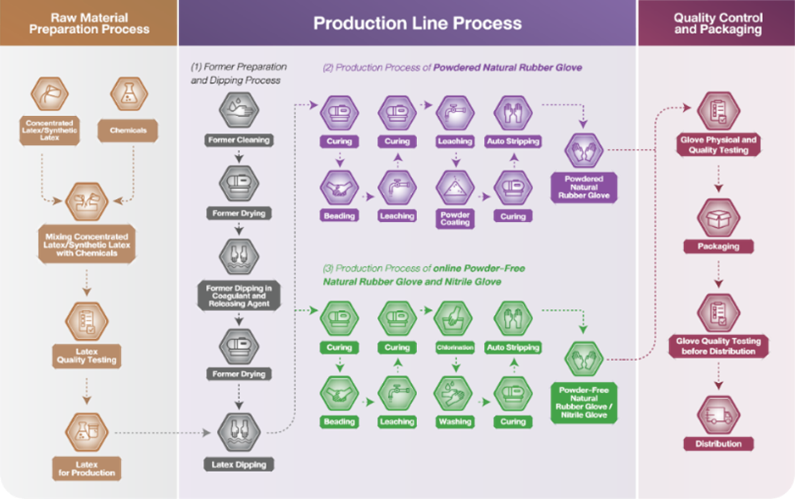
(3) Energy and Utilities
Besides raw materials and chemicals, the Company's rubber glove factory also uses energy and utilities in its production process, which are (1) thermal energy which uses firewood as a fuel source, (2) electricity as a power source of machinery used in the production process and (3) industrial water for use in the process of preparing raw materials and the production line processes. These resources support efficient and continuous production operations.
For thermal power, the Company procures firewood for use as fuel to produce energy from Anvar Parawood Co., Ltd. ("ANV"), an STA group company, at the market price that ANV actually buys firewood, plus ANV's operating fee. For electricity, all the electricity used in the production process is from the Provincial Electricity Authority, Electrical substation, and Electricity generated by solar cells in the factory area. The factory that installed electrical substation received a certificate for its application and installment by relevant agencies. In addition, the Company procures industrial water from surface water and underground water sources which is applied through a water quality improvement process suitable for use in the production process. All of the Company’s branch factories have obtained the proper license to use groundwater from relevant agencies.
(4) Product Delivery
The Company uses the freight forwarding service of Starlight Express Transport Company Limited ("STL"), a company in the STA group that specializes in transportation and management operations related to in-country land transport including providing other related services such as customs clearance, implementation of tax incentives, as well as preparation of documents and coordination with government and private agencies involved in import and export until the completion of the process. The Company hires STL at the same rate as the service fee charged by STL for other customers within STA Group.
For the transportation of the Company's products internationally, there are international commercial terms that are agreed with each customer, whereby the sea transport company used is selected by either the Company or the customer or an external company with expertise in ocean shipping is hired (depending on the case).
The Company continues to manage its logistics costs prudently and consistently to maintain efficiency amid various global uncertainties, such as geopolitical conflicts and international trade tensions that affect freight rates, as well as disruptions and unpredictability in global shipping routes.
(5) Storage of Inventories
The Company has a warehouse to store inventories at each branch factory. Its inventories include raw materials, firewood, spare parts, consumables, packaging, in-process products and finished goods, whereby most of the said inventories are raw materials, firewood, spare parts and consumables which it manages based on the lead time from ordering the product until their delivery and the safety stock level. There is a process for review and checking the inventory level on a regular basis. Most of the finished goods are products that have already been purchased and awaiting delivery due to the fact that most of the Company’s production is made to order for the customers. In addition, the Company also has a warehouse located in Samut Prakan Province to store and distribute gloves to the customers in Thailand. Moreover, the Company has oversea warehouses of its subsidiaries located in the People's Republic of China, the United States, Indonesia, and the Philippines for storing products that are for selling to customers in those countries
(6) Manufacturing Factory and Maintenance
Manufacturing Factory
As of 31 December 2024, the Company has 6 branch factories that manufacture rubber gloves as follows: Hat Yai Branch Factory, Surat Thani Branch Factory, Trang Branch Factory, Sadao P.S., Branch Factory, Anvar Branch Factory, and Chumphon Branch Factory. There are a total of 146 integrated production lines at all of its factories, with the installed capacity of rubber gloves of approximately 48,320 million pieces per year.
Manufacturing Factories | Products | Number of Production Lines (Lines) | Installed Capacity (million pieces per year) |
Hat Yai Branch Factory Hat Yai district, Songkhla province | Powdered and powder-free natural rubber gloves Nitrile rubber gloves | 40 | 10,503 |
Surat Thani Branch Factory Kanchanadit District, Surat Thani Province | Powdered and powder-free natural rubber gloves Nitrile rubber gloves | 32 | 9,979 |
Trang Branch Factory Kantang district, Trang province | Powdered and powder-free natural rubber gloves | 34 | 13,323 |
Sadao P.S. Branch Factory Sadao district, Songkhla province | Nitrile rubber gloves | 8 | 2,903 |
Anvar Branch Factory Sadao district, Songkhla province | Powder-free natural rubber gloves Nitrile rubber gloves | 20 | 7,257 |
Chumphon Branch Factory Pathew district, Chumphon province | Powder-free natural rubber gloves Nitrile rubber gloves | 12 | 4,355 |
The total production of rubber gloves of the Company for the years ended 31 December 2023, 2024, and 2025 can be summarized as presented in the following table.
The table show total production of rubber gloves of the Company.
For the year ended 31 December | |||
2023 | 2024 | 2025 | |
Installed capacity(1) (million pieces per year) | 52,527.1 | 50,785.1 | 51,112.0 |
Technical capacit (million pieces)(2) | 43,061.3 | 50,648.9 | 47,208.0 |
Actual production (million pieces) | 27,920.1 | 39,132,516.546.8 | 39,146.8 |
Utilization Rate (percent)(3) | 64.8 | 82.964.2 | 82.9 |
Remarks:
(1) Installed capacity means the installed capacity of the factories per year at the end of the relevant period, supposing a machine can operate for a full year.
(2) Estimate the capacity that can be produced, calculated from the installed capacity of the factories per year at the end of the relevant period, taking into account the estimated number of working days, the period of maintenance of machinery and equipment and the time required for one cycle of the production based on the time the machine can run through the relevant time.
(3) The utilization rate is calculated from the actual production volume of the factories during the relevant time period and divided by the estimated capacity that can be produced during that period.
(6) Maintenance
The Company’s rubber glove manufacturing factories have a monthly or usage-based maintenance plan for each machine. An annual maintenance budget is established in advance. Such maintenance consists of checking the machinery condition, cleaning and replacement of parts based on predetermined schedules to ensure machinery and devices work efficiently, thus reducing the risk of shutdown as well as for the safety of the operators, whereby the Company hired Premier System Engineering Co., Ltd. (“PSE”), a subsidiary of the Company specializing in equipment and machinery in the manufacture of rubber gloves, to provide maintenance, cleaning and readiness checks of the equipment and machinery of the Company's 6 branch factories which is a one-time hiring according to a predetermined plan at a service rate comparable to market prices.
(7) Environment
The Company realizes and values the importance of business operation together with caring for the environment by not only producing quality products which are safe for consumers, but also committed to producing products with environmentally friendly technology, as evident from its announcement of an environmental policy and application of the ISO14001 environmental management standard system. The Company also pays attention to resource and energy conservation which is a factor affecting the emission of carbon dioxide that causes global warming. The Company uses renewable energy by using biomass fuel and has a project to minimize carbon dioxide emissions that includes establishing a solar cell system, expanding the usage of electric forklifts, using LED light bulbs, and enhancing energy-saving gear. In addition, employees are encouraged to participate in resource and energy conservation through activities such as the Kaizen Green Process Contest and Digitization Project to reduce the use of electricity, water, oil, chemicals and paper in the production process, as well as campaigning to reduce the use of plastic bags, waste sorting and cycling in factories, etc.
In terms of the environmental management system, the Company has set objectives, targets and guidelines for the prevention of environmental impacts, including the 3R concept: Reduce Re-use Recycle, for example, the wastewater that has been treated according to the standards from the last pond of the wastewater treatment system is reused in the production process at the Chumphon and Surat Thani Branch Factories, Waste to Value (waste sorting) project and the waste separation project, Reduce Usage = Reduce Waste, at Hat Yai Branch, the Waste Recycling Bank for Eggs project, Wooden pallet weaving projects in Surat Thani and Trang Branches, Economic Insect Farming” project at the Sadao P.S. branch to help find ways to reduce the use of various resources and reduce the amount of waste. In addition, the Company has a plan for monitoring, inspecting, measuring and reporting on the environment management has been prepared in accordance with relevant regulations and laws, such as monitoring and reporting the quality of water discharged from the factory, measurement of air emission from boiler operation, measurement of specific industrial waste such as sludge from wastewater treatment systems and the delivery of industrial waste disposal to agencies registered with the Department of Industrial Works. The Company has also conducted surveys of the nearby communities to learn of and collaborate with them to solve problems. Moreover, the Company also participates in various projects of the government that supports environmental conservation and focuses on enhancing environmental management for industrial facilities. As a result of these effective environmental management practices, all six of the Company’s facilities have acquired the environmental management system certification ISO14001:2015. In 2025, the Sadao P.S., Chumphon branch factories also received Carbon Footprint for Organization certificate and rubber glove products of the Company have also acquired the Green Industry Level 4 (Green Culture) certification from the Ministry of Industry, becoming the fourth factory to receive this certification following the Hat Yai, Surat Thani, Trang, and Sadao P.S. branch factories. The Chumphon and Anvar branch factories received the Green Industry Level 3 (Green System) certifications.
As for reducing greenhouse gas emissions, the Company has set sustainability targets to reduce greenhouse gas emissions per unit of product (Scope 1 and Scope 2) by 20 percent from the 2024 baseline by 2030, and to reduce organizational greenhouse gas emissions (Scope 1 and Scope 2) by 23 percent from the 2024 baseline by 2030. In 2025, emissions per unit of product (Scope 1 and Scope 2) were reduced by 12.72 percent compared with the 2024 baseline, while organizational emissions (Scope 1 and Scope 2) were reduced by 17.24 percent—both in line with planned targets.
(8) Certificates
As of 31 December 2025, the Company has received more than 60 certificates that have been audited by independent industrial and trade standards organizations both domestically and overseas. There are several significant certificates, as follows:
Certificates | Branch Factories | |||||
Hat Yai Branch | Surat Thani Branch | Trang Branch | Sadao P.S. Branch | Anvar Branch | Chumphon Branch | |
ISO 9001:2015_ Quality Management System Issuing Institution: TUV SUD America Inc. |
|
|
|
|
|
|
EN ISO 13485:2016_ Medical Devices Quality |
|
|
|
|
|
|
ISO 13485:2016_ Medical Devices Quality Management System (MDSAP) Issuing Institution: TUV SUD America Inc. |
|
|
|
|
|
|
ISO 14001:2015_ Environmental Management System |
|
|
|
|
|
|
ISO 45001:2018_ Occupational Health and Safety Management System |
|
|
|
|
|
|
ISO 22000:2018_ Food Safety Management System |
| |||||
BRCGS_ Global Standard for Consumer Products Personal Care and Household |
|
|
|
|
|
|
ISO 22301:2019_ Business Continuity Management System |
| |||||
ISO/IEC 17025:2017_ Accredited Laboratory complying with the ISO/IEC 17025:2017 |
|
|
| |||
Good Manufacturing Practice (GMP) for Medical Devices |
|
|
|
|
|
|
Forest Stewardship Council (FSCTM) Certification Requirements Standard |
| |||||
Amfori BSCI |
|
|
|
|
|
|
Carbon Footprint for Organization (CFO) |
|
|
|
|
|
|
Green Industry |
(Level 4: Green Culture) |
(Level 4: Green Culture) |
(Level 4: Green Culture) |
(Level 4: Green Culture) |
(Level 3: Green System) |
(Level 3: Green System) |
Force Labor (ILO’s 11 Indicators related to their work and living condition) |
|
|
|
|
|
|
Industrial Product Manufacturing License Issuing Institution: Thai Industrial Standards Institute (TISI) Significance: Certified by the Thai Industrial Standards Institute (TISI), confirming the product’s quality and safety in accordance with international standards. The Company is committed to advancing innovation and maintaining the highest standards to strengthen customer and public confidence while supporting sustainable business growth. |
|
|
|
|
|
|


Tax Benefit
Factories for gloves manufacturing of the Company have been supported by the Board of Investment of Thailand (“BOI”). The details of rights and privilege from the investment promotion currently received by each factory are as follows.
Factory | Certificate No. | Expiry Date for Tax Priviledge on Exemption of Corporate Income Tax | Expiry Date for Tax Priviledge on 50 percent Reduced from Normal Corporate Income Tax |
Hat Yai Branch Factory | 62-0651-1-00-1-2 | 3 November 2024 | 3 November 2027 |
661865-2-04-1-0 | None | 27 December 2026 | |
Surat Thani Branch Factory | 62-0654-0-00-2-2 | 2 January 20222 | 2 January 2027 |
62-0846-1-00-1-0 | 1 September 2025 | 1 September 2025 | |
68-1835-2-39-6-0 | None | 1 September 2032 | |
63-0848-1-00-1-0 | 1 September 2025 | 1 September 2025 | |
68-1832-2-39-6-0 | None | 1 September 2032 | |
Trang Branch Factory | 62-1307-1-00-1-0 | 24 January 2025 | 24 January 2028 |
62-0669-0-00-2-2 | 17 November 2024 | 17 November 2029 | |
62-0668-0-00-2-2 | 16 June 2024 | 16 June 2029 | |
62-0667-0-00-2-2 | 1 September 2025 | 1 September 2025 | |
68-1833-2-39-6-0 | None | 1 September 2032 | |
64-0915-1-00-1-0 | 1 September 2025 | None | |
68-1834-2-39-6-0 | None | 1 September 2032 | |
Sadao P.S. Branch Factory | 63-0847-1-03-1-0 | 17 September 2029 | 17 September 2034 |
Anvar Branch Factory | 63-0849-1-03-1-0 | 5 January 2032 | 5 January 2037 |
63-0850-1-03-1-0 | 6 October 2032 | None | |
Chumphon Branch Factory | 64-0916-1-00-1-0 | 31 August 2027 | None |
Production Capacity (Overall)
| Item | Unit | Used | Capacity |
|---|---|---|---|
| The Company's 6 Branch Factories | Piece | 77.7 | 48,320,100,000 |
Domestic/Overseas Purchase Proportion (Overall)
| Raw Material | Source Country | Value |
|---|---|---|
| - | Thailand | 0 |
Nature of Business — Overview
Introduction
The Company operates the business of manufacturing and distributing rubber gloves for medical use and in other industries. The main products are natural rubber powdered gloves (NRPD), natural rubber powder free gloves (NRPF) and nitrile butadiene rubber gloves (NBR). Most of the rubber gloves that the Company manufacture and distribute are under medical specifications. As of 31 December 2025, the Company has a total installed capacity of approximately 48,320 million pieces per year. The Company is the largest rubber glove manufacturer in Thailand and is among the world's largest manufacturers of rubber gloves with details as follows.
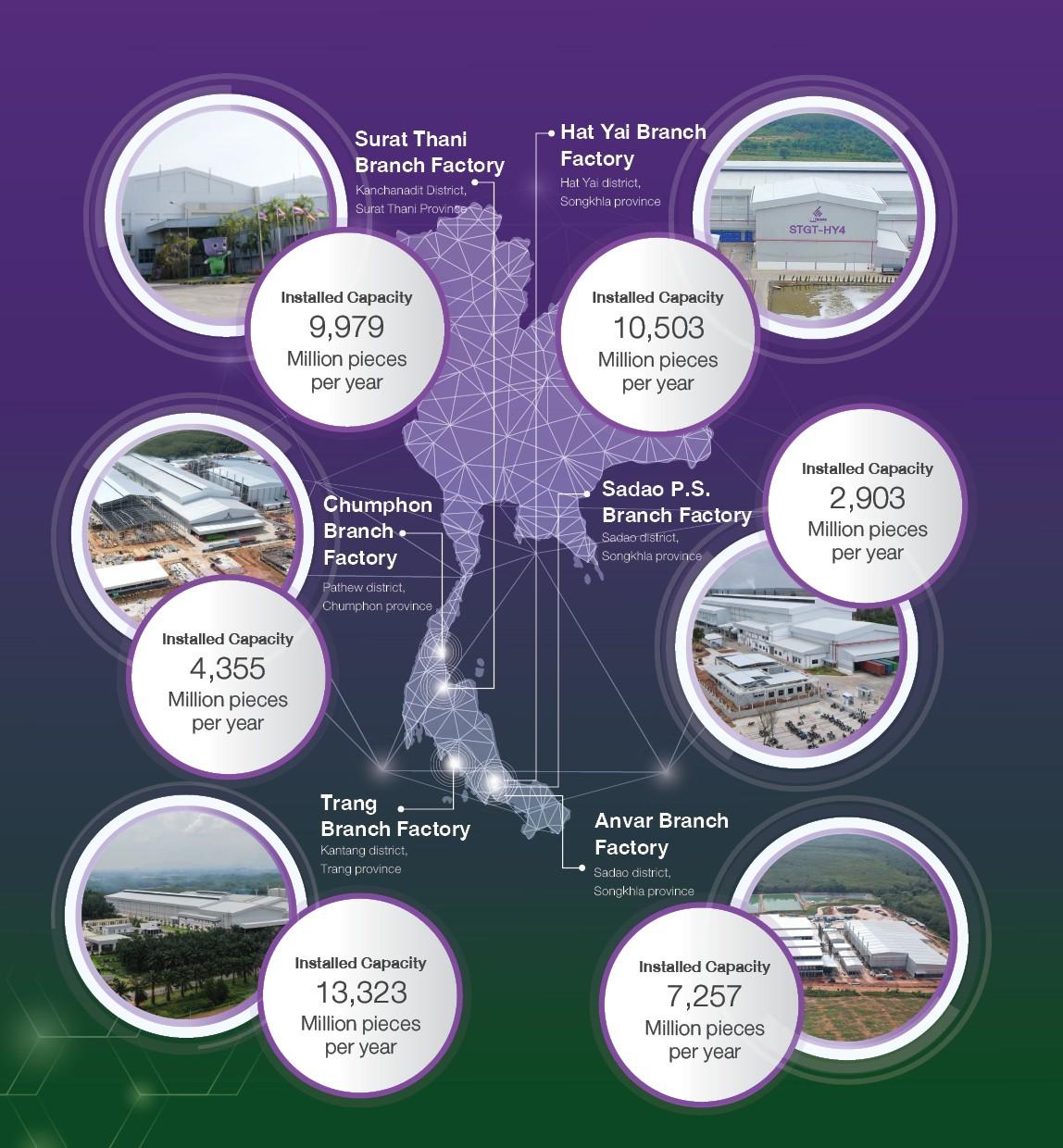
Product Information — Overview
Introduction
Details of sales volume of rubber gloves of the Company for the year ended 31 December 2023, 2024 and 2025 are as follows:
Sales Volume of Rubber Gloves (Unit: million) | Consolidated Financial Statements for the Year Ended 31 Dec 2023 | Consolidated Financial Statements for the Year Ended 31 Dec 2024 | Consolidated Financial Statements for the Year Ended 31 Dec 2025 |
Sales Volume of NRPD, NRPF, and NBR Gloves | 31,384.0 | 38,548.8 | 37,102.2 |
Projects Under Construction
Has Projects Under Construction (Y/N)
No
Debentures & Bills of Exchange
Has Debentures (Y/N)
Yes
Debentures
| Debenture Name | Description / Rating | Interest Rate (%) | Outstanding | Maturity Date | Term | Types |
|---|---|---|---|---|---|---|
| Green Debentures Tranche 1 | Principal Amount of Debentures: THB 550 million
Interest rate: Fixed interest rate | 2.97 | 0 | 28 September 2025 | 3 Years | 2789 · Description: Senior Debenture · 2791 · Description: Unsecured Debenture |
| Green Debentures Tranche 2 | Principal Amount of Debentures: THB 400 million
Interest rate: Fixed interest rate | 3.91 | 400 | 28 September 2029 | 7 Years | 2789 · Description: Senior Debenture · 2791 · Description: Unsecured Debenture |
| Green Debentures Tranche 3 | Principal Amount of Debentures: THB 550 million
Interest rate: Fixed interest rate | 4.25 | 550 | 28 September 2032 | 10 Years | 2789 · Description: Senior Debenture · 2791 · Description: Unsecured Debenture |
Convertible Securities
Has Convertible Securities (Y/N)
No